
Digitally Printed Overlays for OEM and Medical Equipment Manufacturers: Speed, Precision, and Unlimited Color in Every Run
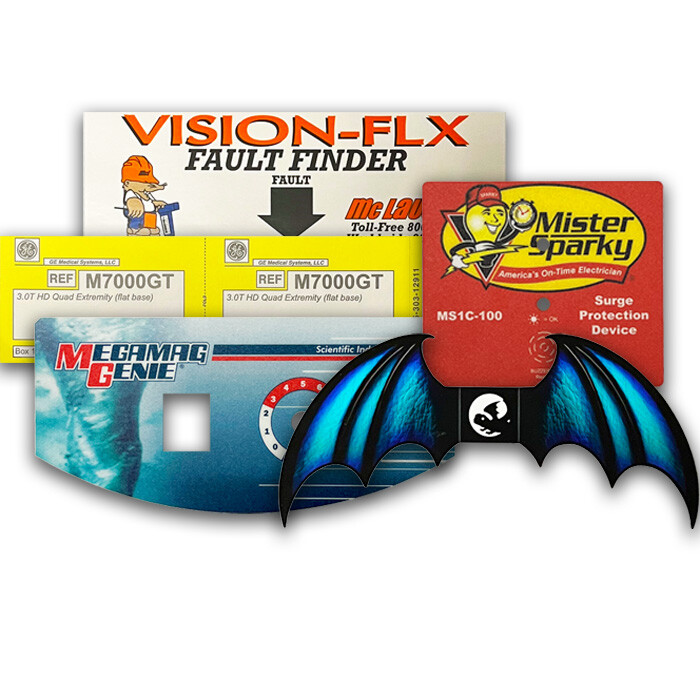
A product’s interface has to communicate clearly. Button labels, operating instructions, display windows, and brand graphics must work together within the dimensions of the finished equipment. For engineers and procurement teams, the challenge is sourcing an overlay that meets those requirements while supporting production schedules and design changes. Digitally printed overlays are a practical option when a project involves detailed artwork, multiple colors, or smaller production quantities. Because they can be printed with photos, logos, and graphics, they give you flexibility when developing equipment interfaces without limiting the design to simple graphics. At Data Graphics, Inc., we’ve been delivering industrial printing since 1984. From our Mount Dora facility, we design and manufacture digitally printed overlays for OEM, aerospace, telecom, medical, and defense companies across the country.
What Are Digitally Printed Overlays?
Digitally printed overlays are printed surface components that present information on equipment and electronic products. They can brand a product, identify it, or guide the operator to press the right buttons to perform a technical job. An overlay may surround a display, mark a group of switches, or form the visible face of a control panel. We produce them for industrial controls, appliances, cell phones, ATMs, and exercise equipment such as treadmill interface panels. Custom graphic overlays require attention to both appearance and usability. The design must coordinate with the components beneath it so users can recognize the correct control and read the information they need. A visually appealing layout still has to remain readable at the size and viewing distance of the finished product.
How We Produce Digitally Printed Overlays
We print overlays on a digital press, which shortens the production run, makes overlays more affordable, and eliminates set-up costs. Digital printing often delivers very fast turnaround times as well. For an equipment overlay, the artwork is only one part of the production specification. We also need to understand the part’s dimensions, substrate, attachment surface, and intended operating conditions. A useful project brief should establish:
- The product blueprint or custom die-cut shape, with overall dimensions and required openings
- Text, symbols, logos, photos, and Pantone color references
- Material and finish requirements
- Adhesive coverage and areas that must remain adhesive-free
- Quantity and requested delivery date
Providing these details together helps your engineering and purchasing teams evaluate the same configuration. It also gives us a clearer basis for discussing manufacturing options, and our sales representatives can walk you through the available materials, imaging techniques, and cosmetic options before your order proceeds.
Why Digital Printing Fits Complex Designs and Short Runs
An equipment interface may contain several visual elements within a compact area: instructions, color-coded functions, company branding, and detailed symbols. Digital printing supports photos, logos, and graphics, and its shorter production runs make it well suited to custom graphic overlays. It also offers unlimited serialization, barcodes, and data, so every single piece can be personalized. This flexibility is especially useful during product development, when the interface design is still being evaluated. You may need a limited quantity for a new equipment configuration rather than a large inventory of parts. Digital printing should still be selected around the application. We also offer screen printed overlays, giving you another method to consider when reviewing your graphic and production requirements. The decision should account for the artwork, quantity, materials, and finished appearance rather than assuming one process suits every order. For procurement teams, the practical question is how the proposed construction supports the production plan. Discussing the complete specification early helps us determine whether a digital approach fits your project’s priorities.
Polycarbonate, Polyester, and Vinyl Overlay Materials
We offer polycarbonate, polyester, and vinyl for digitally printed overlays. Selecting among them requires more than choosing a preferred appearance; the material must suit the way the finished equipment will be used.
Polycarbonate for Durable Equipment Interfaces
Polycarbonate resists extreme temperatures, chemical exposure, and impact. It’s a strong option for equipment overlays that need a durable surface while carrying clearly defined graphics. When evaluating polycarbonate, specify the expected handling, environmental exposure, and visual requirements. Those details help us determine the appropriate construction rather than treating every polycarbonate film as interchangeable.
Polyester for Repeated Handling and Cleaning
Polyester is another option for functional controls and equipment identification. It resists tears, abrasions, and harsh chemicals, and it’s the strongest and most durable substrate we offer for functional controls and equipment labeling. Our Autotex offering is a hard-coated polyester designed for demanding applications that require both flexibility and durability. Autotex is scratch-resistant and can withstand repeated cleaning and frequent handling. Still, the specific cleaning agents and exposure conditions should be part of the material review so the selection reflects your actual application.
Vinyl for Application-Specific Requirements
Vinyl is also part of our overlay capabilities. Its suitability should be reviewed against the equipment surface, intended use, and required finish. Rather than selecting a substrate by name alone, tell us the conditions the overlay must withstand. Material, adhesive, and surface protection need to work together as a finished construction, and we’re glad to help you choose the right materials for your application.
Pantone Color Matching and Full-Color Graphics
Color can organize an interface as well as represent a brand. A defined palette helps distinguish functions, group related controls, and maintain a consistent appearance across equipment models. Our digital overlay capabilities include Pantone color matching, spectrophotometric color matching, gradients, halftones, and four-color process printing. Because our digital process uses four-color process printing, color options are unlimited, and photo-quality processing is also available. For engineers and designers, a Pantone reference provides a specific target to communicate to us. Include the required references with your artwork instead of relying exclusively on how a color looks on a monitor. The “unlimited color” advantage describes broad design freedom. A production specification should still identify the colors that matter most and establish how the finished result will be reviewed. This is especially important when brand colors or functional color distinctions are critical to the equipment interface.
Producing Overlays From Blueprints and Custom Shapes
A printed overlay must fit the physical product. Graphics need to align with controls, while the part’s outline and openings must correspond to the panel beneath it. We manufacture digitally printed overlays from your product blueprints or custom die-cut shapes. Our capabilities also include close-tolerance die cutting for a snug fit, quick prototyping, and laser cutting for prototypes and short runs. Your drawing should clearly distinguish printed features from physical openings. A printed circle indicating a control, for example, communicates a different requirement from a hole that must accommodate a component. Keeping the artwork and dimensional drawing on the same revision helps prevent conflicting instructions. Before requesting pricing, confirm that both documents reflect the intended production design.
Finishes, Adhesives, and Functional Overlay Features
Surface treatment and attachment requirements influence how an overlay performs after installation. We offer velvet, matte, anti-glare, and glossy finishes, along with hard coat finishes. A digitally printed overlay can be made chemical, moisture, shatter, scratch, and scuff resistant, or laminated for a durable, long-lasting life. Most control panel overlays are sub-surface printed, which shields the graphics from abrasion, spills, moisture, chemicals, dust, and UV damage. Additional customization options include embossing, debossing, and texture or selective texture. Embossing styles include pillow, rail or rim, dome, and Braille for ADA compliance. We can add adhesive or selective adhesive, including adhesive-free button or window areas, and include transparent and tinted windows and graphics for backlighting LCDs, LEDs, and other displays. These features should serve the product’s function. Identify where operators need tactile guidance, where visibility is essential, and which areas must attach securely to the enclosure. A coordinated specification is more useful than selecting decorative and functional details independently.
Applications Across Medical, OEM, Aerospace, and Telecom Equipment
Different industries bring different priorities to an overlay project. For medical equipment manufacturers, identification must hold up to daily handling and repeated cleaning, so we select materials and adhesives around the device’s surfaces, cleaning agents, and operating conditions. OEM teams need the finished part to fit the product and maintain consistency across orders, so we work from your drawings, dimensions, colors, and application requirements. Aerospace applications call for precise specifications and often involve high temperatures. Telecommunications equipment may introduce exposure to heat, handling, moisture, or sunlight. Defense contractors also need suppliers familiar with demanding requirements, including abrasion, weather, and chemicals. Telecommunications, aerospace, medical, military, and manufacturing companies trust us with overlays, nameplates, UIDs, and die cut products. The common purchasing priority is a clear match between the supplied part and the documented requirement. Sharing operating conditions early gives us the information we need to evaluate that match.
Quality Certifications Behind Our Mount Dora Manufacturing Facility
We hold AS9100:2016 Rev D and ISO 9001:2015 certifications. Our AS9100 certificate, issued by DQS Inc., identifies our Mount Dora facility, and its scope includes the manufacture of product identification labels, including nameplates and overlays. We’re also ITAR certified and a CSA Certified Converter, and we use UL-approved substrates and adhesives under PGDQ2, which requires the adhesive, base material, printing, system, and lamination to be approved as a complete system. These credentials support supplier evaluation for teams that prioritize controlled, consistent manufacturing. They describe our quality management system and approvals; individual orders still require clearly defined drawings, materials, and acceptance requirements. Our quality policy emphasizes immediate and precise response to customer needs, employee involvement in continuous improvement, and continuous reduction of non-conforming material. For engineers and purchasing managers, those priorities align with the need for dependable communication and parts produced to specification.
Request a Quote for Digitally Printed Overlays
A useful quote begins with a complete description of the required part. Send us your current blueprint, artwork, material preferences, quantities, operating conditions, and requested delivery date. Include any critical color references, adhesive patterns, or inspection requirements so the proposed construction addresses them from the start. Whether you’re developing a medical equipment interface or sourcing custom graphic overlays for an OEM product, we bring decades of industrial printing experience to your project. Request a quote for digitally printed overlays to discuss your specifications with our team, or call us at 800.639.4316.