
What’s New With The Data Graphics Crew?
Happenings and What-Not’s From Your Full-Service Custom Printing Solution
Commentary: F-35 Lightning II jet powers Central Florida aerospace industry
https://www.orlandosentinel.com/2026/05/20/commentary-f-35-lightning-ii-jet-powers-central-florida-aerospace-industry/
Commentary: F-35 Lightning II jet powers Central Florida aerospace industry

Technological ambition has always powered progress, and few industries demonstrate that more clearly than aerospace. Every new breakthrough pushes the boundaries of what is possible, quite literally lifting innovation to new heights.
We at Data Graphics take pride in knowing that the systems we manufacture support missions around the world, including in regions such as Eastern Europe and the Middle East, where U.S. and allied F-35s are actively demonstrating their capabilities in combat. The advanced manufacturing required to support this aircraft is not confined to a single facility; it happens in communities nationwide. In Florida, the strength and dynamism of the defense industry are on full display.
A total of 82 employees in Mount Dora produce essential placards, overlays, labels and asset tagging for the F-35 program. Just as the parts we build are among thousands upon thousands of parts that comprise the fighter jet, the F-35 program itself links together a vast network of companies. Collectively, Florida’s F-35 industrial base supports more than 30,000 jobs and contributes more than $23 billion in economic activity. But the importance of the F-35 extends well beyond economic figures.
One of the jet’s defining strengths is its role as an information hub: collecting, processing, and distributing critical data across the battlespace and among allied forces in real time. In combat, that advantage is clear: the F-35 can coordinate operations while remaining difficult to detect, combining communication, situational awareness and stealth in a single platform.
 Unlike many earlier aircraft, the F-35 was designed with the future in mind. Its architecture allows it to incorporate new technologies as they are developed, ensuring the jet continues to evolve as threats change. Expanding production means not only equipping more allied forces but also supporting the companies and workers who build the system — from major manufacturers to specialized suppliers like Data Graphics.
Congress can ensure that this program remains a cornerstone of American airpower and a vital contributor to the nation’s security and industrial strength with consistent investment and forward-looking policy decisions. At a time when global security challenges are intensifying, maintaining technological leadership remains essential. The F-35 Lightning II represents that commitment to leadership — an aircraft that connects allies, strengthens American industry and delivers unmatched capability in the skies.
Buffy Carroll is the vice president of sales at Data Graphics, headquartered in Mount Dora.
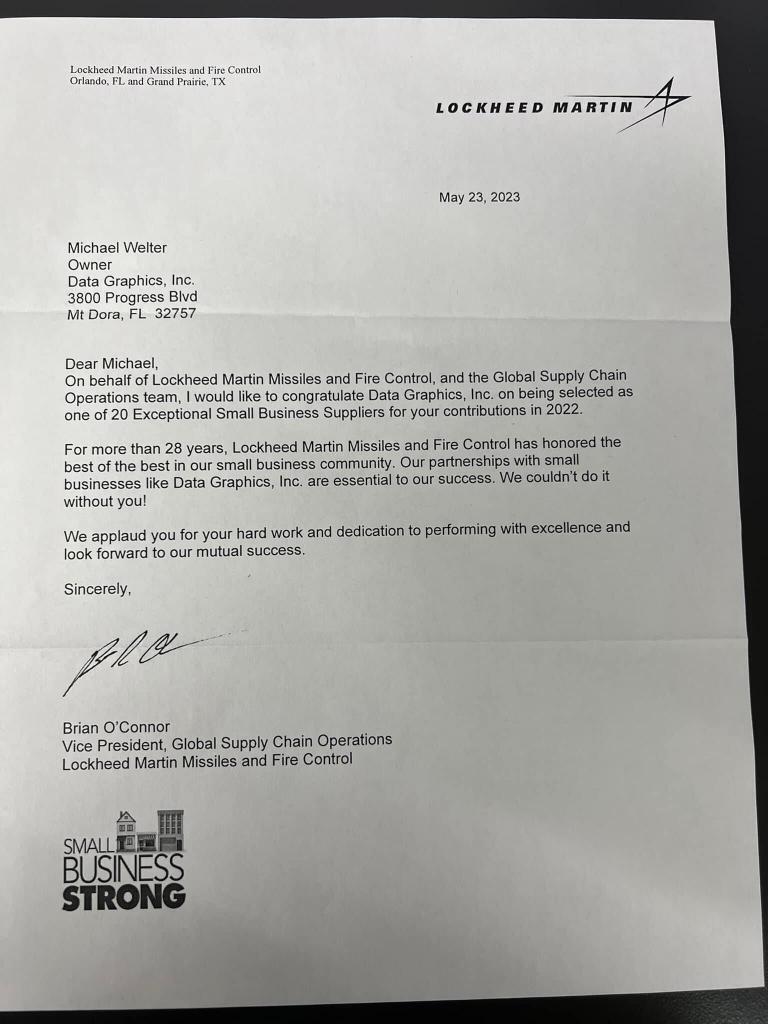
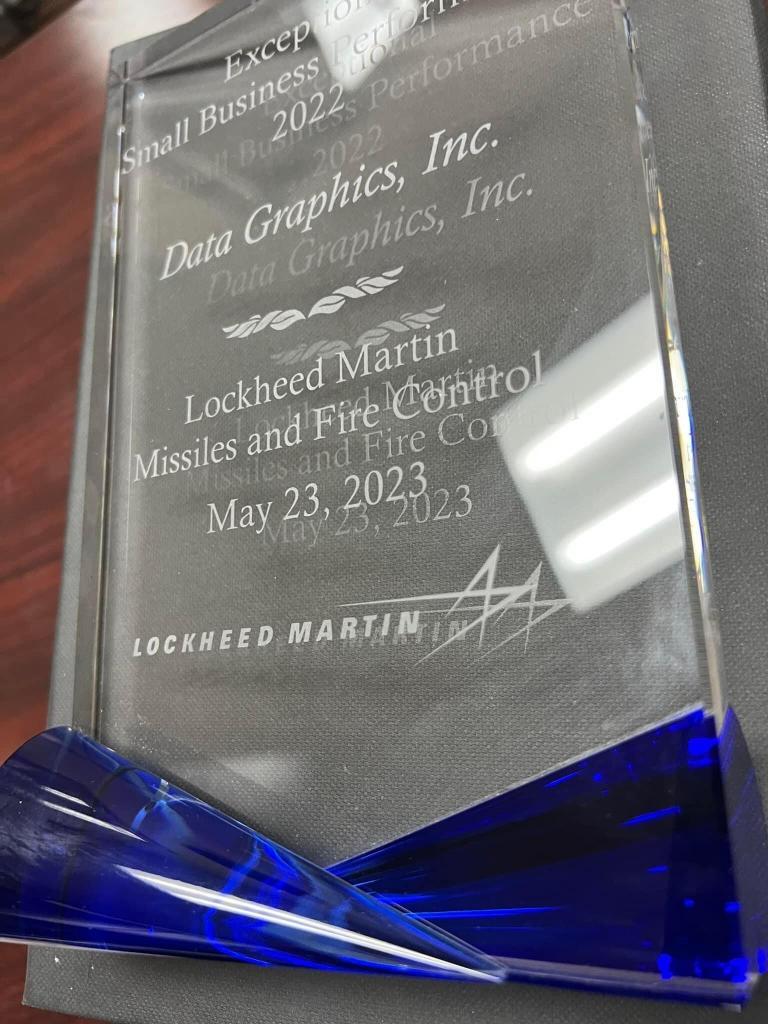
2022 Outstanding Small Business Supplier for Lockheed Marting and 2023 GrowFL Companies to Watch Awardee
“Data Graphics exhibits its initiative by performing one-off testing, late-day/off-day meetings, and constant, constructive communication. DG is gold standard of what Lockheed Martin looks for in excellent small business to partner with in their supply chain, production operations, and quality processes.”-LM Subcontract Manager.
So grateful for our longtime partnership with Lockheed Martin and our team of professionals here at DG. Selected as one of 20 Exceptional Small Business Suppliers in 2022!
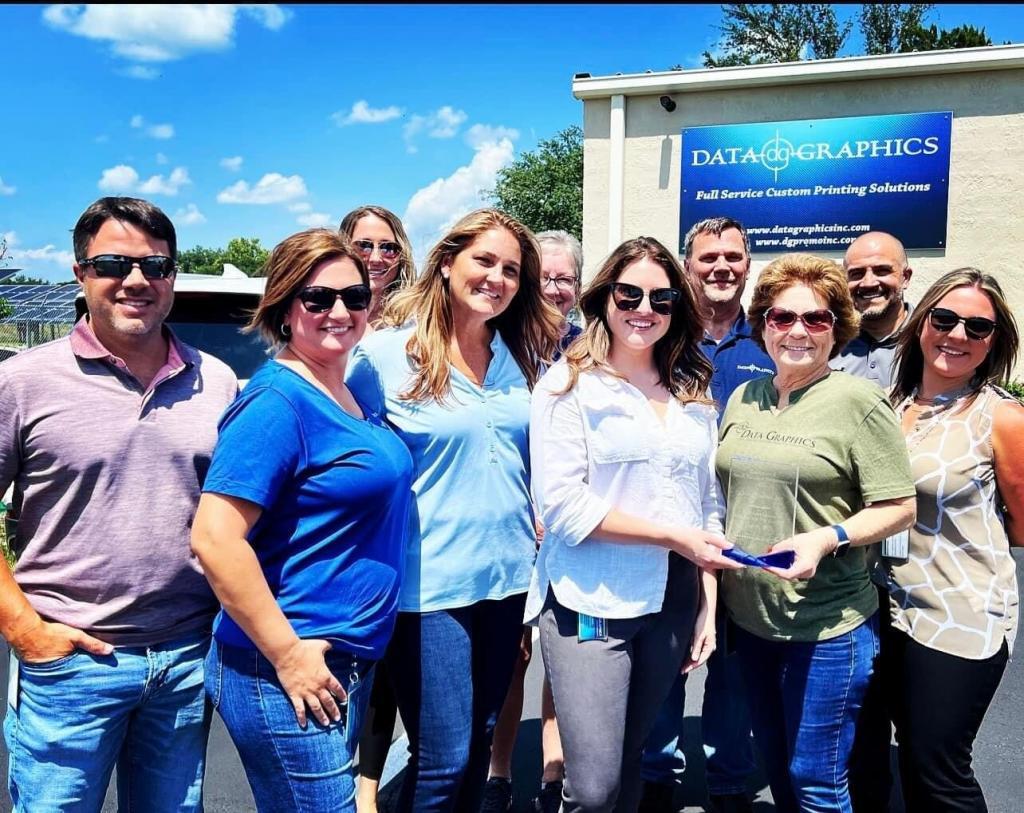
Data Graphics is proud to share that we are 1 of 50 companies selected as the 13th Annual GrowFL Florida Companies to Watch Honoree. We are thrilled be recognized and selected for our contributions towards developing valuable products and services, creating quality jobs, enriching our community and broadening new industries throughout Florida.

Awards & More
Outstanding Small Business – Lockheed Martin
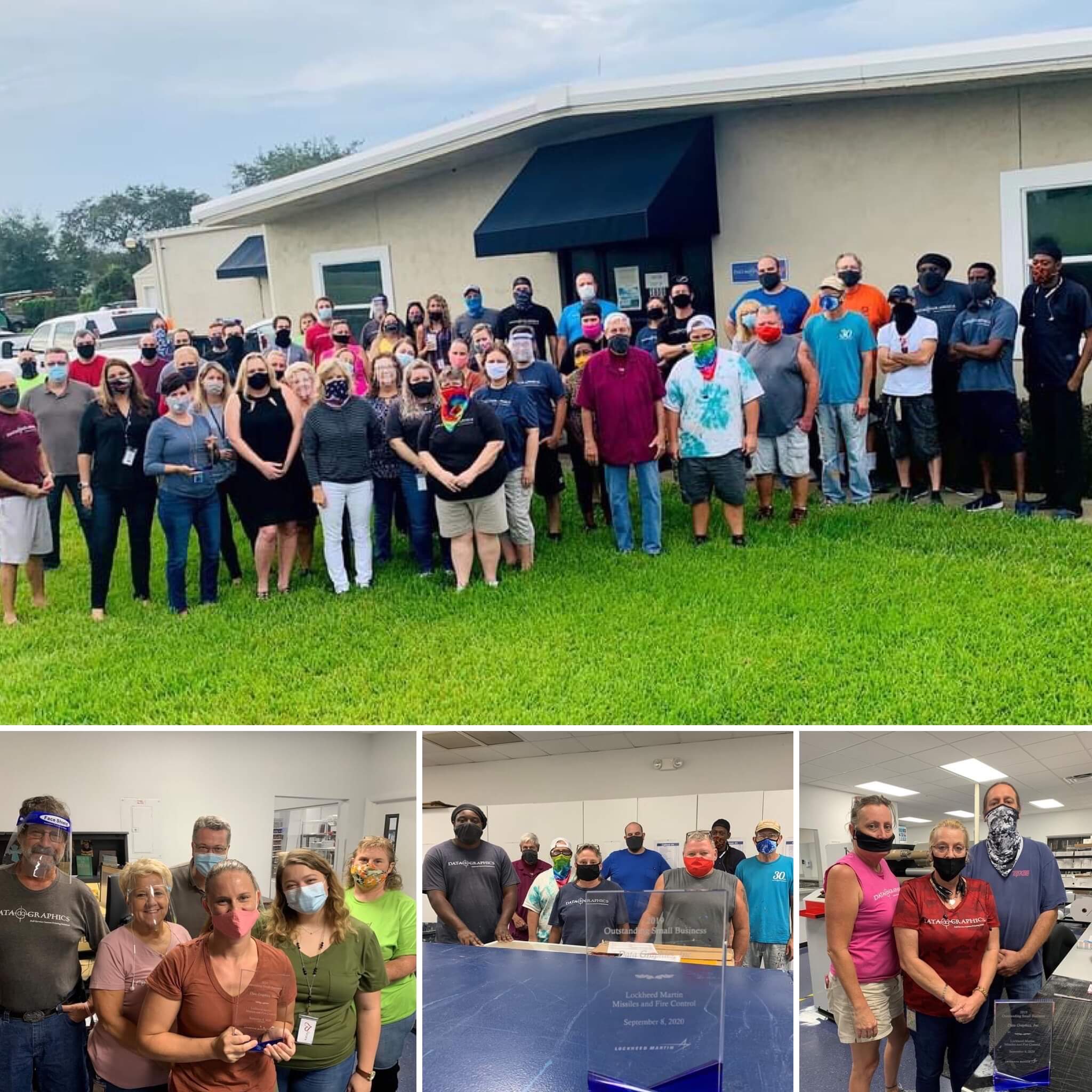
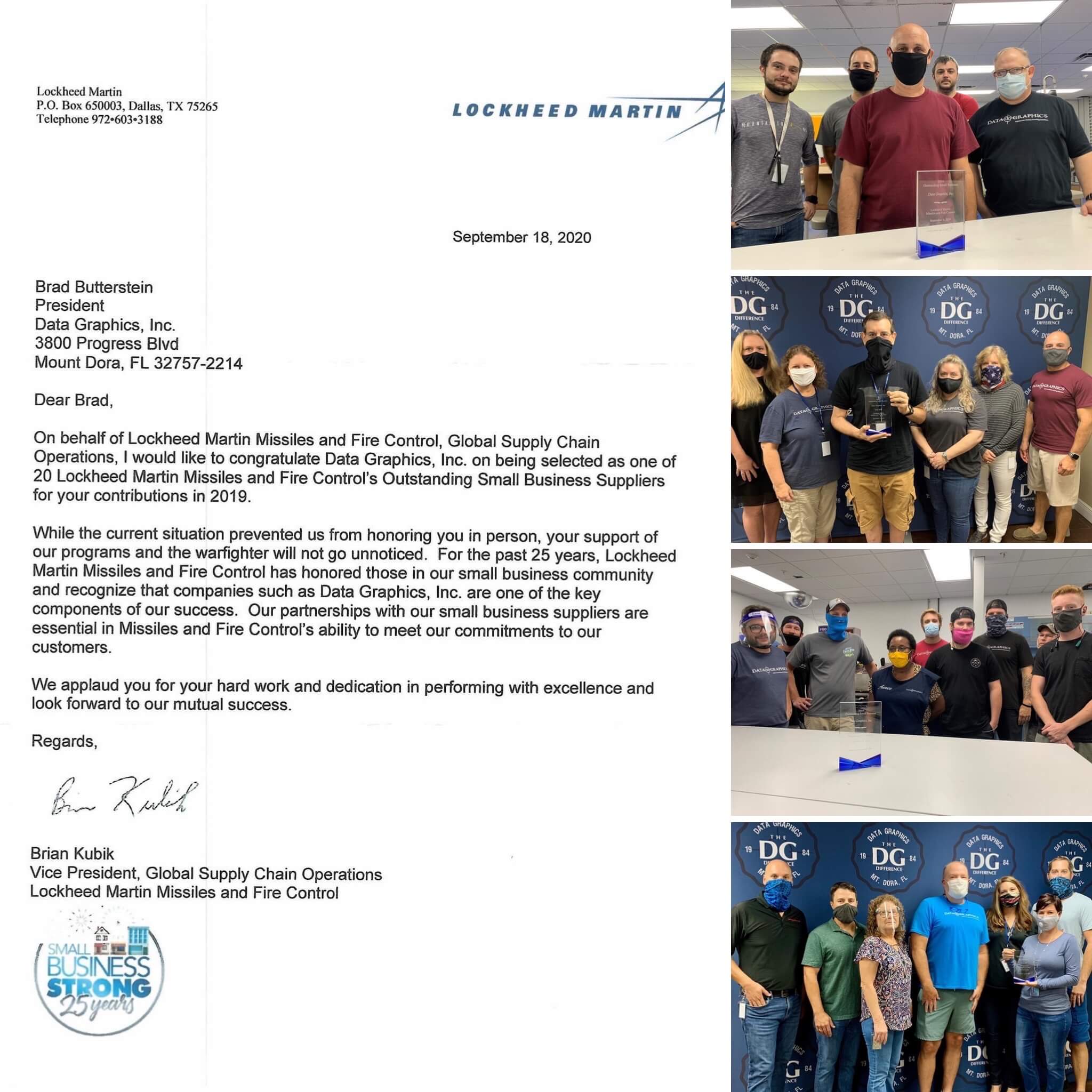
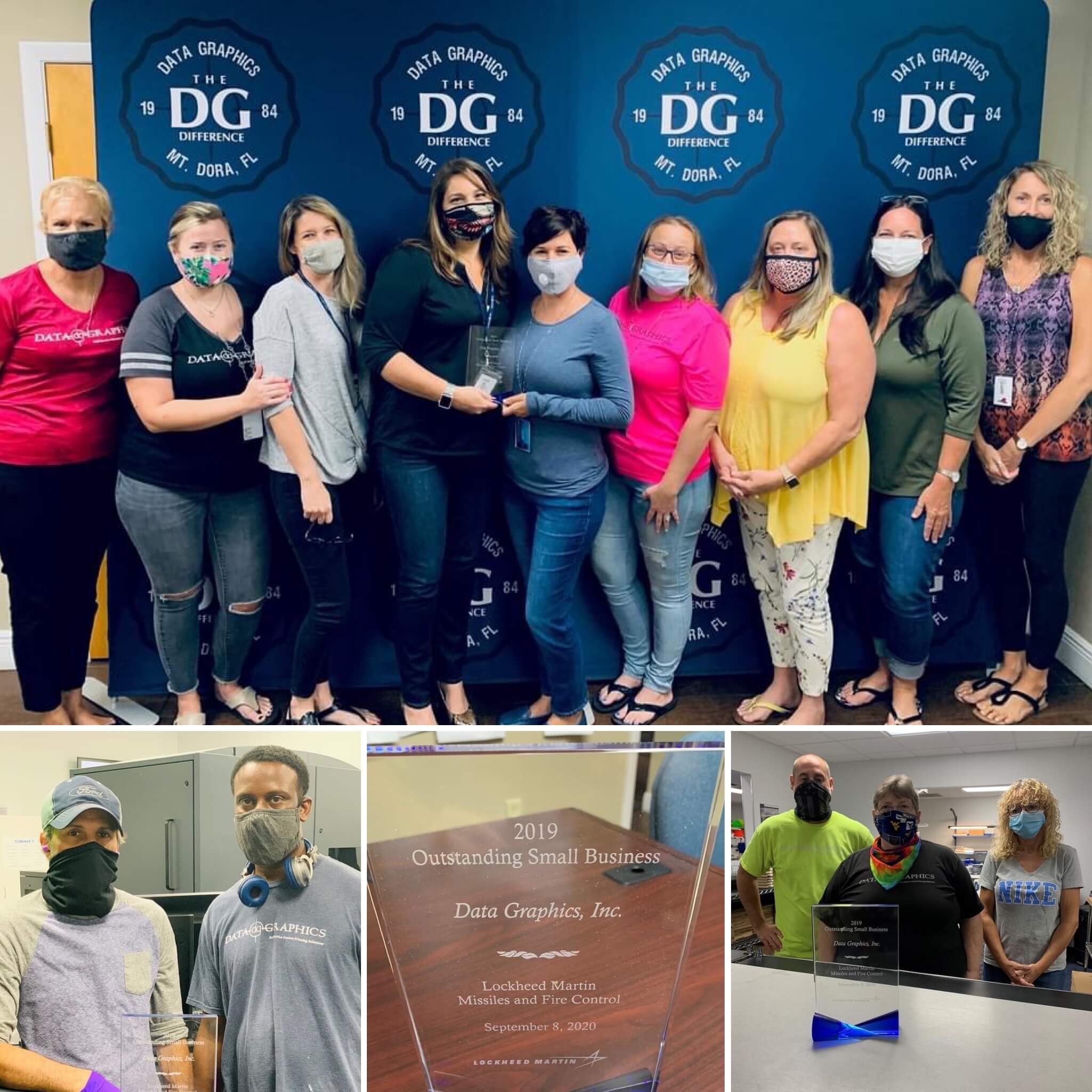
Data Graphics is proud to announce that we have been selected as a 2019 Outstanding Small Business Supplier to Lockheed Martin! Of a total vendor base of 15,800, Data Graphics is 1 of only 77 to receive such a distinguished award. Almost 200,000 parts shipped with ZERO defects. We appreciate our partnership with Lockheed Martin and proud of the DG Team for making this happen. #dgdifference
One of Our Own
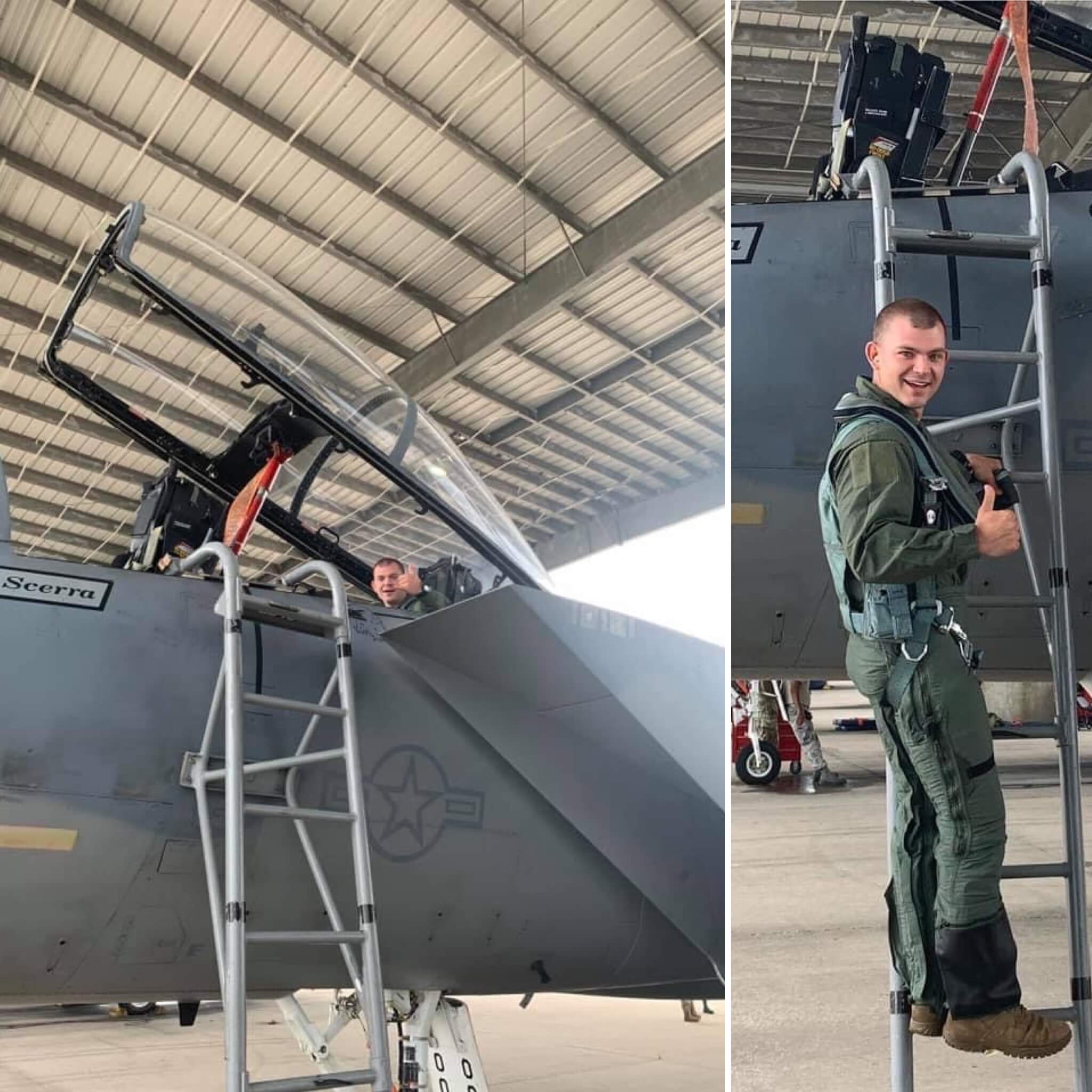
Our Screening Dept Supervisor, Josh, is also in the National Guard. He is currently on a 9 month mission. Shown here, Josh boarded a F-15 during his recent duty. Josh said, “Truly an amazing experience. Blessed to have an opportunity to fly in a F-15!” Knowing that DG does work on many military projects, Josh always keeps an eye out for our work out in the field! Thank you for your service Josh!!
Boeing Gold
Data Graphics has earned the Boeing Performance Excellence Award! Maintaining a minimum GOLD composite performance rating for the 12 months of October 1, 2018 to September 30, 2019, Data Graphics was one of only 62 suppliers to be awarded this level of recognition.. This award marks 3 straight years that DG has received this award.
We are appreciative of our great employees who work non-stop to ensure the Boeing’s quality and delivery standards are met. Data Graphics appreciates our partnership with The Boeing Company.

Thank You for the 1000 Likes on Facebook!
Thank You for the 1000 Likes on Facebook!
If you haven’t heard, we just hit 1000 Likes on our Facebook page. Thank you so much for all our followers – we appreciate you!
Data Graphics hosted the CNC Specialist Class from Lake Technical College…
Data Graphics hosted the CNC Specialist Class from Lake Technical College…
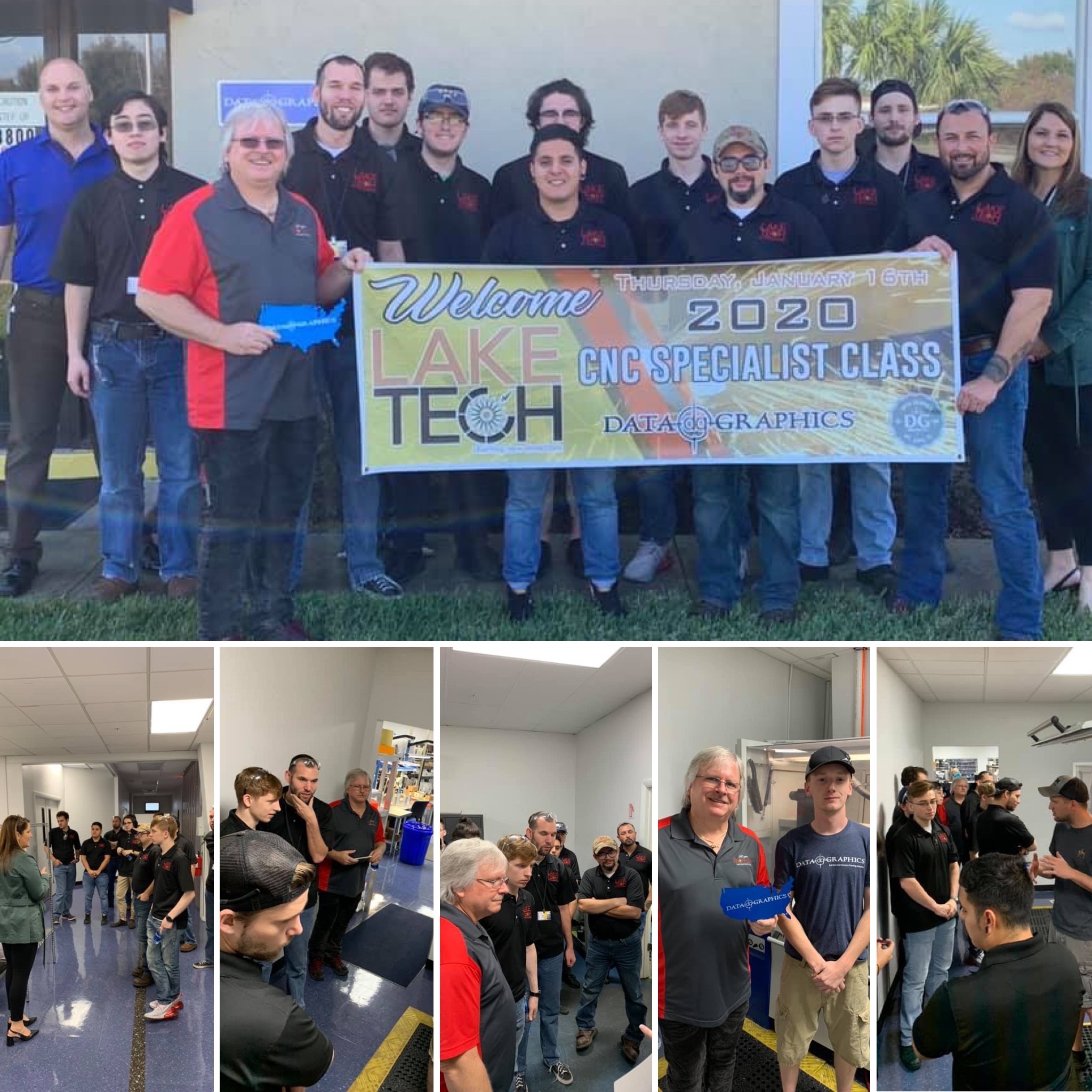
Data Graphics hosted the CNC Specialist Class from Lake Technical College. They spent the day learning about Data Graphics, touring our facility and hearing from one of their fellow classmates who is now a certified CNC Operator and is employed here at DG.
Data Graphics recently celebrated our 35th Anniversary…
Data Graphics recently celebrated our 35th Anniversary…
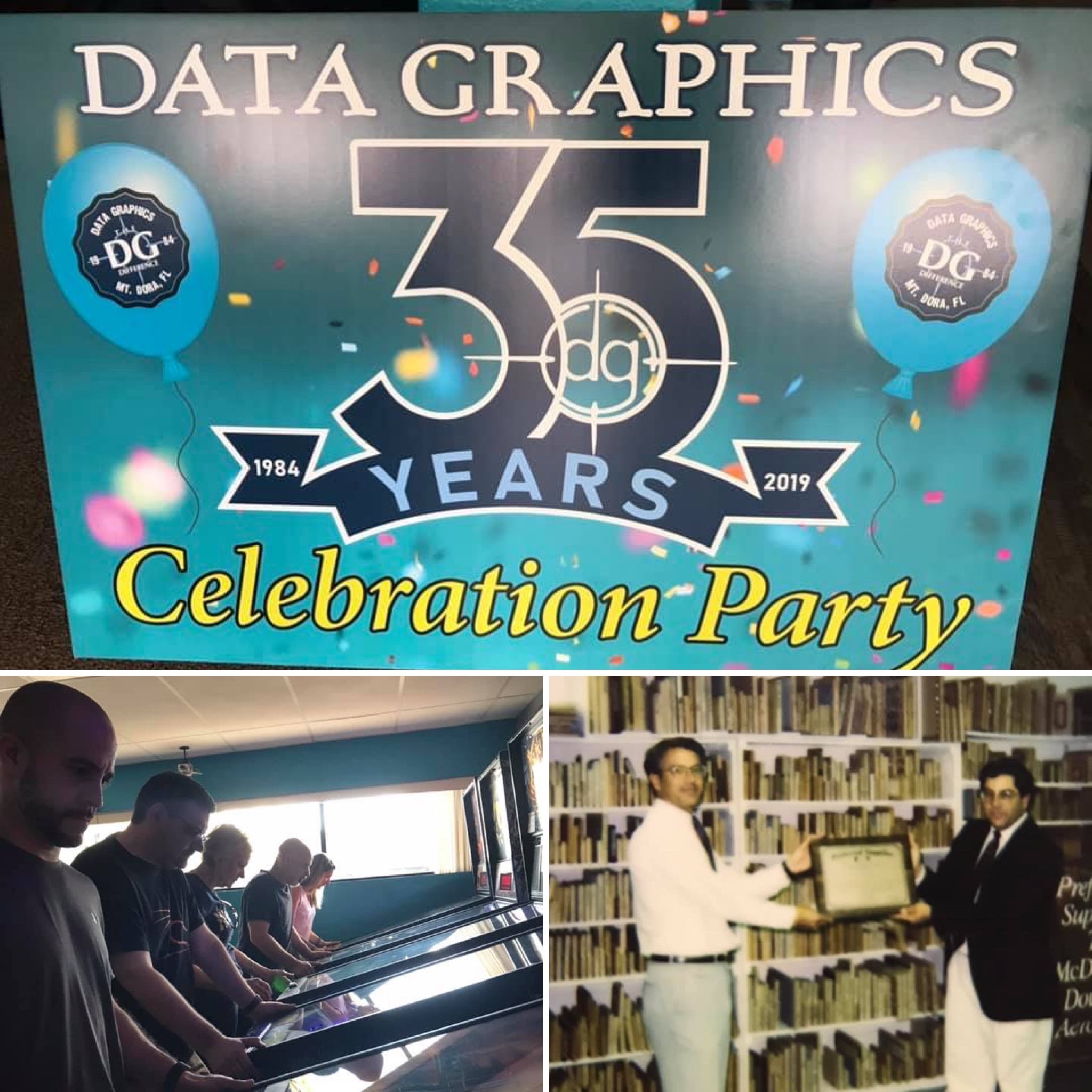
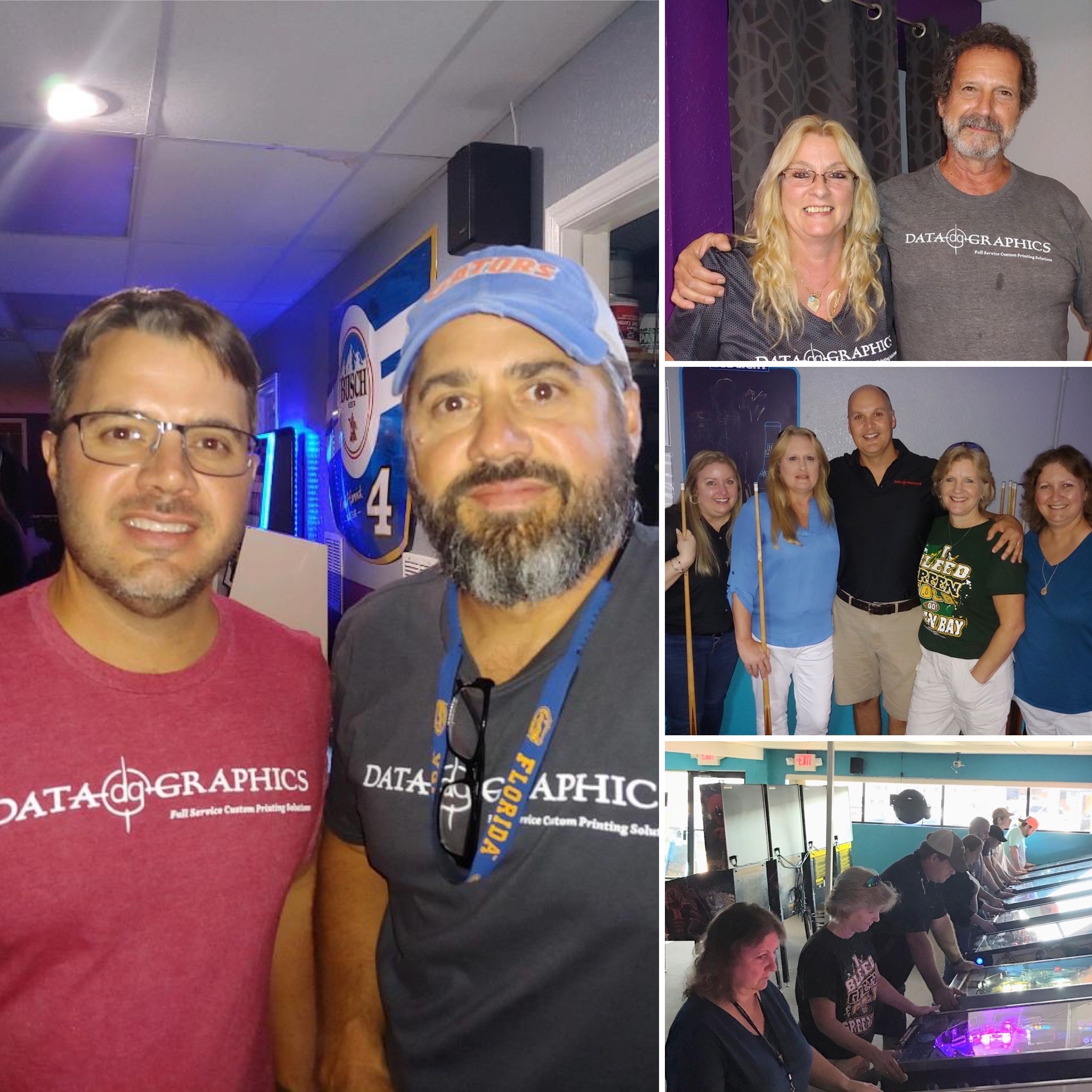
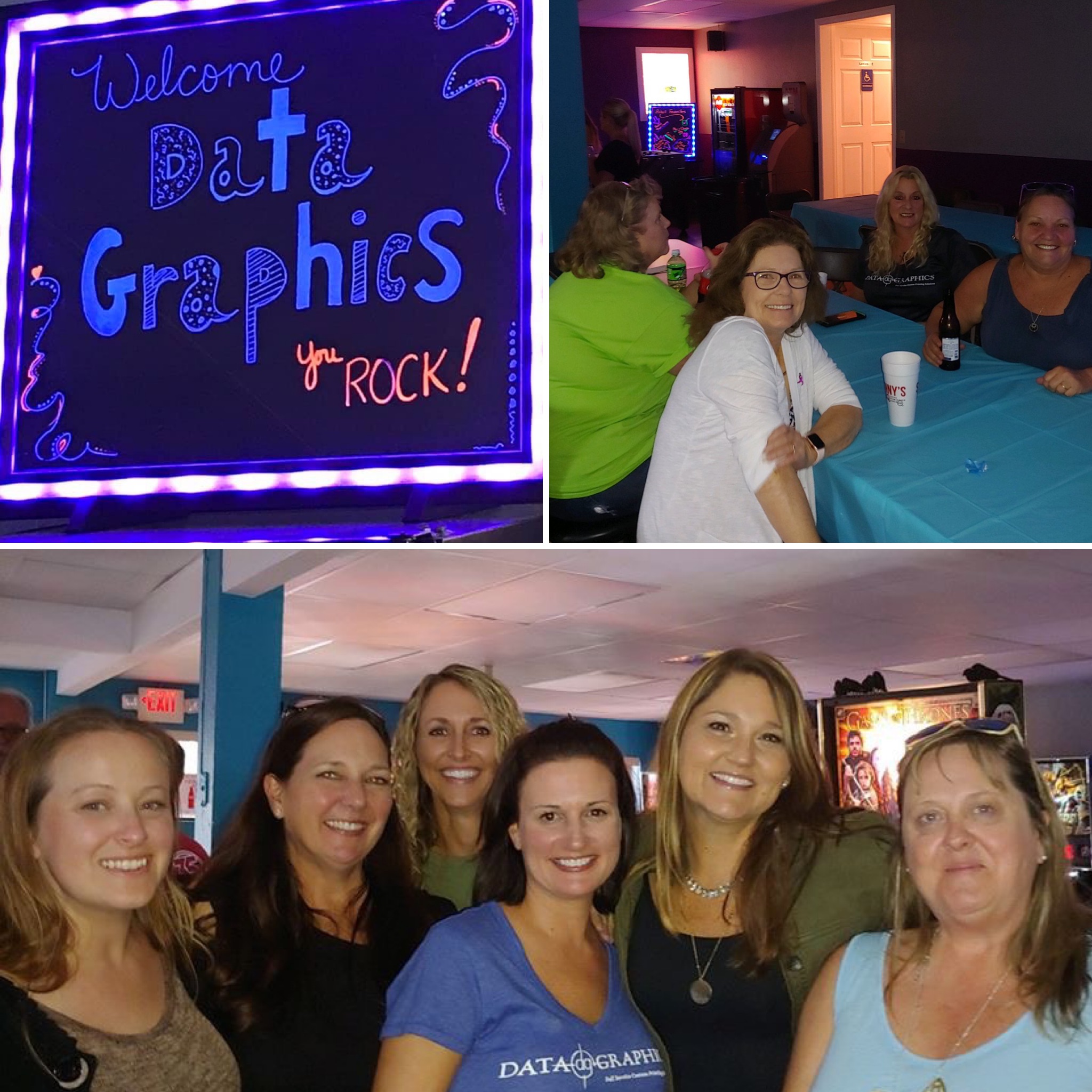
Data Graphics recently celebrated our 35th Anniversary, we are GRATEFUL for the partnerships over the years….our customers, suppliers and our people make the DG Difference a real thing. We enjoyed billiards, pinball, music, video games, food & fun.
We wish all of you a Happy Thanksgiving!
Data Graphics will be closed on the following days for the upcoming holidays, please schedule your orders and deliveries accordingly:
Thanksgiving: November 28th and 29th
Christmas: December 24th-26th
New Year’s: December 31st and January 1st


August 2019 - Celebrating Liz & 30 Years!
Celebrating Liz & 30 Years…
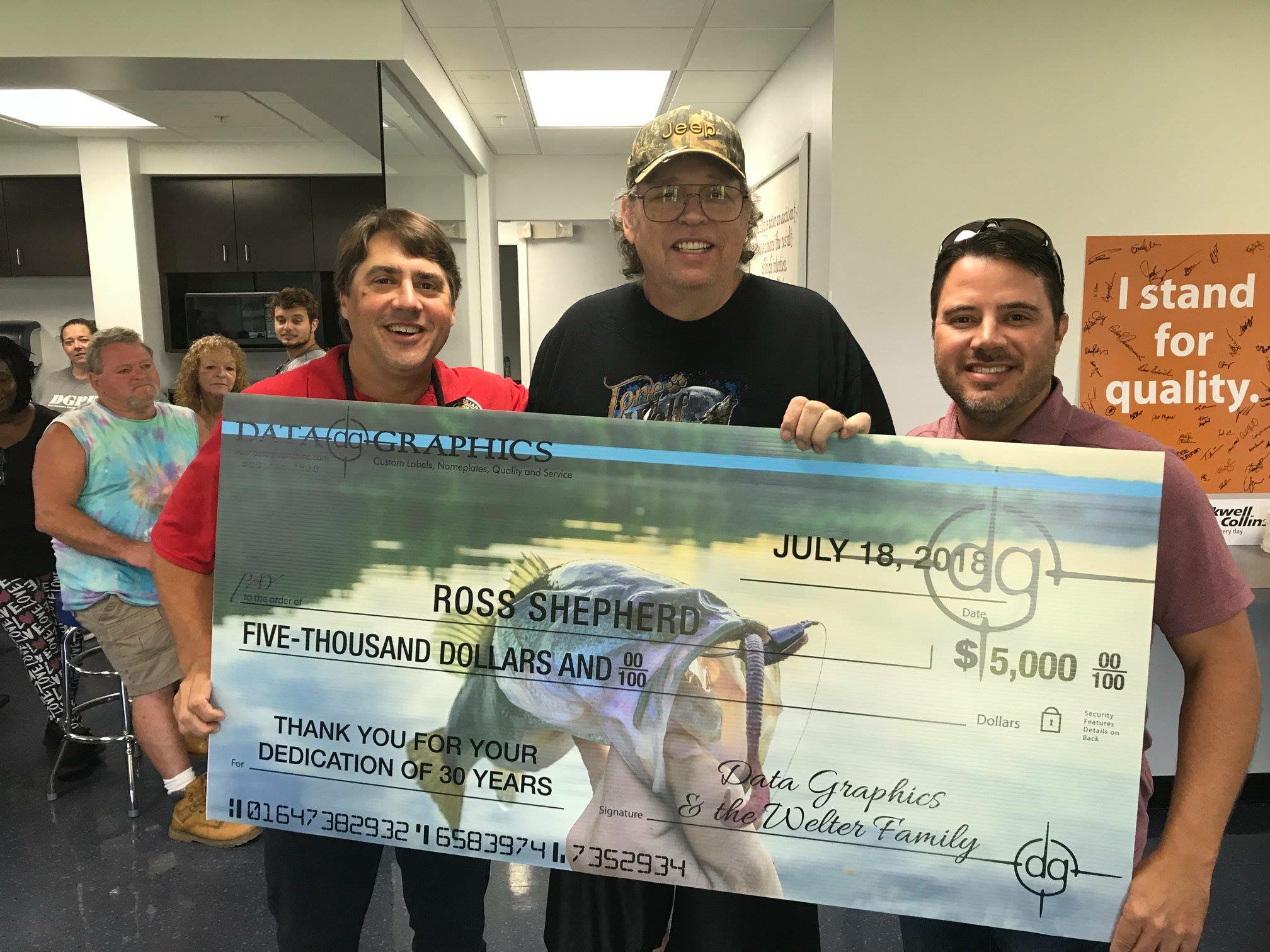
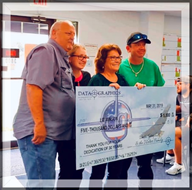 Congrats to our Director of Manufacturing, Liz, on 30 years of service to Data Graphics. We appreciate all of your loyalty and work throughout the years. We were glad your family could join the celebration. Enjoy this $5,000 check as a thank you for your time and commitment.
July 2019 - Buffy Carroll Participates on the US Delegation Team at the ISO Plenary in Sweden
Buffy Carroll Participates on the US Delegation Team at the ISO Plenary in Sweden…

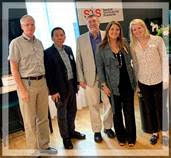
 Last October, Buffy Carroll a 20 year employee of DG was asked to participate on a committee with MHI as a field expert (for labeling). As a member of this committee, she would consult and assist in updating ANSI standards which could later be transformed into an International Standard (ISO). After attending several meetings, she was asked to participate as a US Delegate and attend the ISO Plenary in Stockholm, Sweden this past June. The U.S. along with 18 other countries participated at the TC122 Plenary as the Swedish Institute for Standards (SIS). Many items were discussed from barcoding, labeling, packaging, adhesion and the list goes on. The meeting was a success, Buffy looks forward to attending her next meeting in Reno this October and possibly Korea next year.
May 2019 - Celebrating 35 Years!
Celebrating 35 Years…

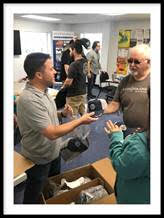 Data Graphics is celebrating our 35th anniversary this year. The Welter family along with the DG team members appreciate all of you for making this happen. To continue with the celebration, our most recent accessory to celebrate with comes as a fully customized Data Graphics ball cap! These ball caps were shared with our team members to show off 35 years of the DG Difference. Shown below is Mike Welter passing out our new ball caps to our DG family.
Happy 35th Anniversary to us!
January 2019 - We Did It Again & Celebrating 35 Years!
We Did It Again…
 Data Graphics is proud to announce that we have passed our surveillance audit for AS9100:2016 Rev D and ISO 9001:2015! We couldn’t have done it without our entire DG Team.
Special recognition to our Quality Assurance Manager, Shane Sherman and our Director of Manufacturing, Liz Minson.
We are proud to have these certifications and provide our customers with a quality product and great customer service.
Celebrating 35 Years

Data Graphics is celebrating our 35th anniversary this year. DG started in 1984 by Bob Welter, Jr., Data Graphics has grown from a small label and overlay printing company to now a full custom printing solutions manufacturer that employs over 70 people. From labels, overlays, nameplates, UID barcodes to corporate apparel, embroidery, promotional products, signs and banners. Data Graphics launched our DG Difference campaign over a year ago, this is our commitment to not only our customers, but to each other.
Flexibility, efficiency, integrity and mutual respect – these are all part of the DG Difference. We want all of our employees and business to be conducted with these characteristics in mind. This builds trust amongst us all which enables the product to move through the plant quicker and get it to your dock. We want to help build your successful business. When you are successful, we are as well. We hope that some of this DG Difference translates to you and beyond.
All of us here at DG are thankful for Bob’s dream, making it a reality, taking risks and are hopeful for the years in front of us.
Happy 35th Anniversary to us!

October 2018 - Boeing Excellence Award, Lots of New Machines, & Congrats to Ross Shepherd
Boeing Excellence Award
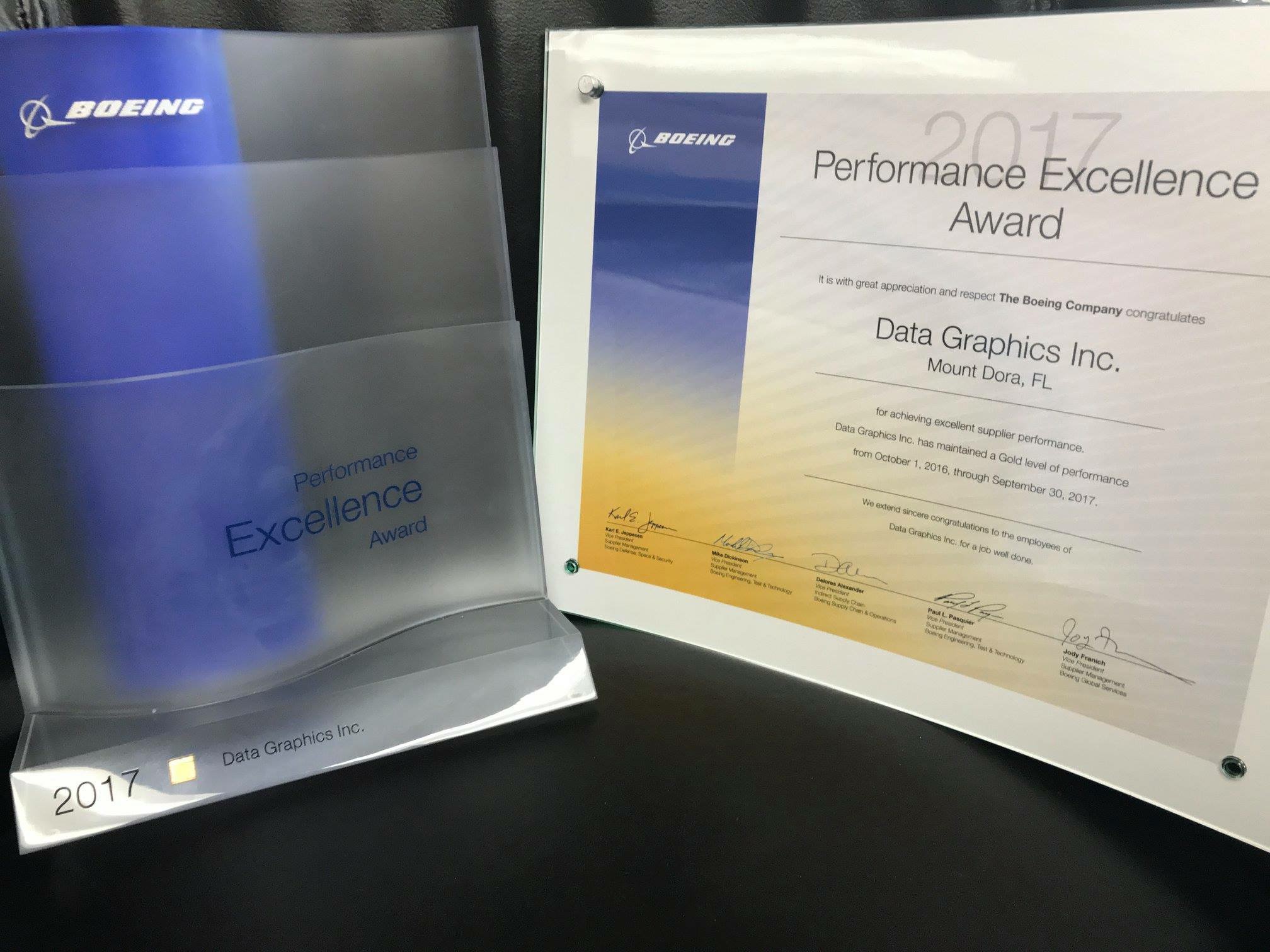 Data Graphics recently was acknowledged by Boeing with their Performance Excellence Award, their highest level of Gold! Only 85 suppliers were awarded the GOLD recognition. We are so proud of the whole team for all of their hard work in achieving and maintaining this level of excellence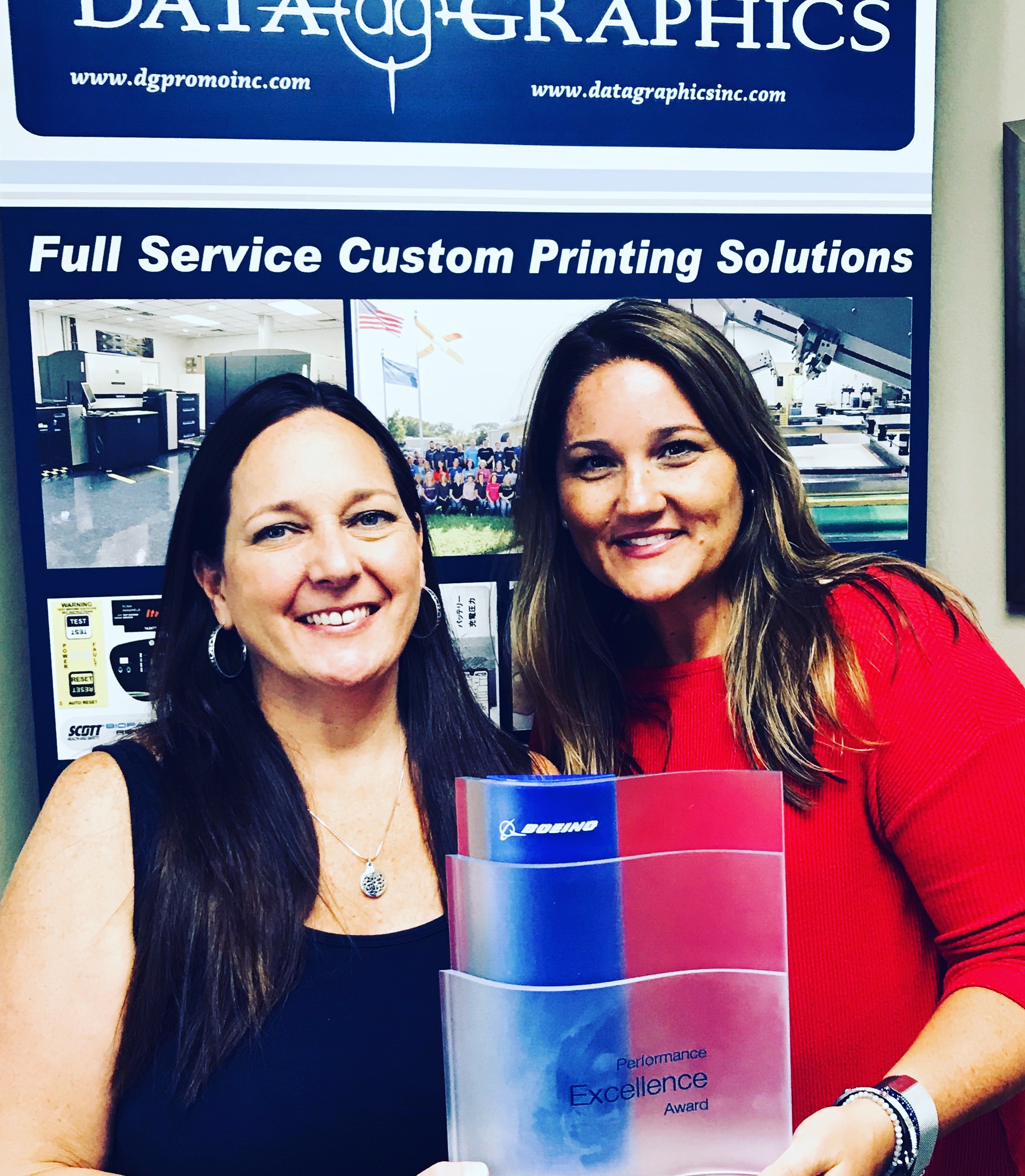
It’s Raining Machines…at DG
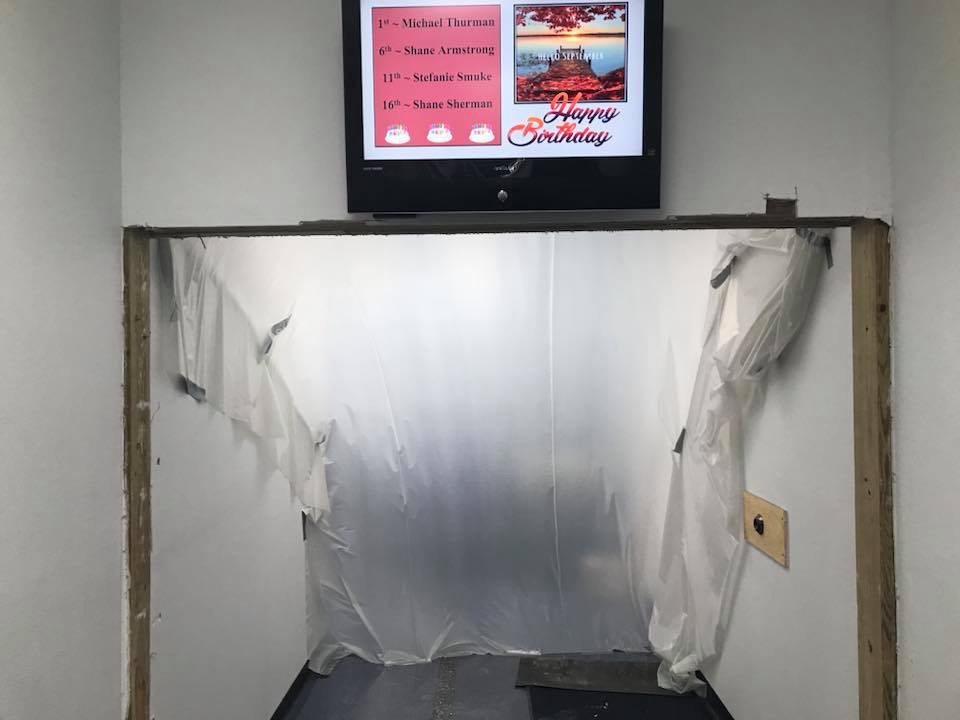
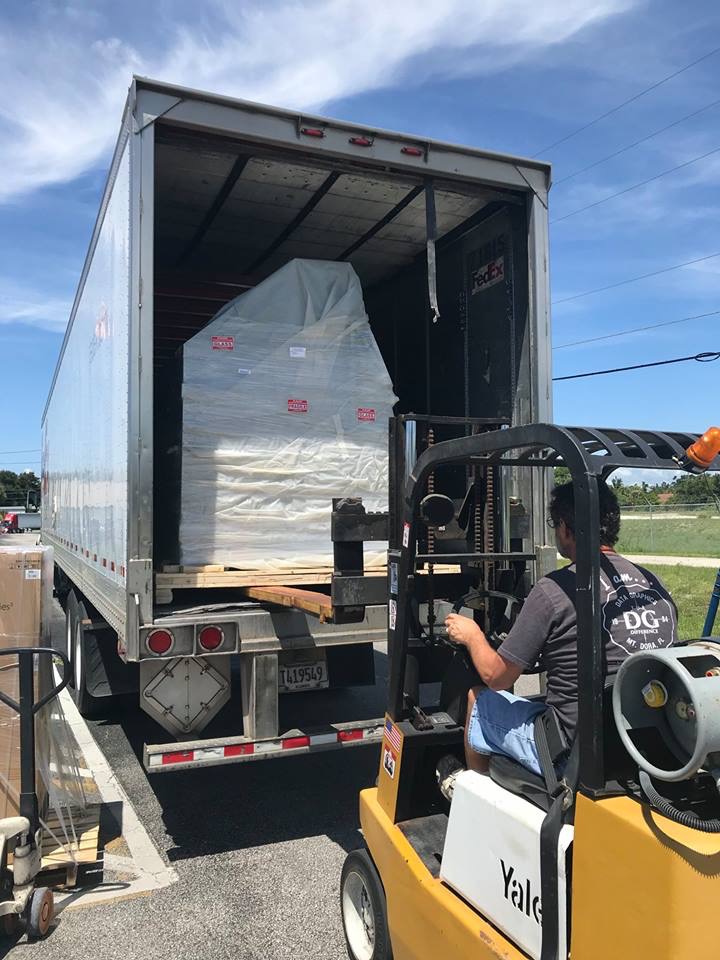
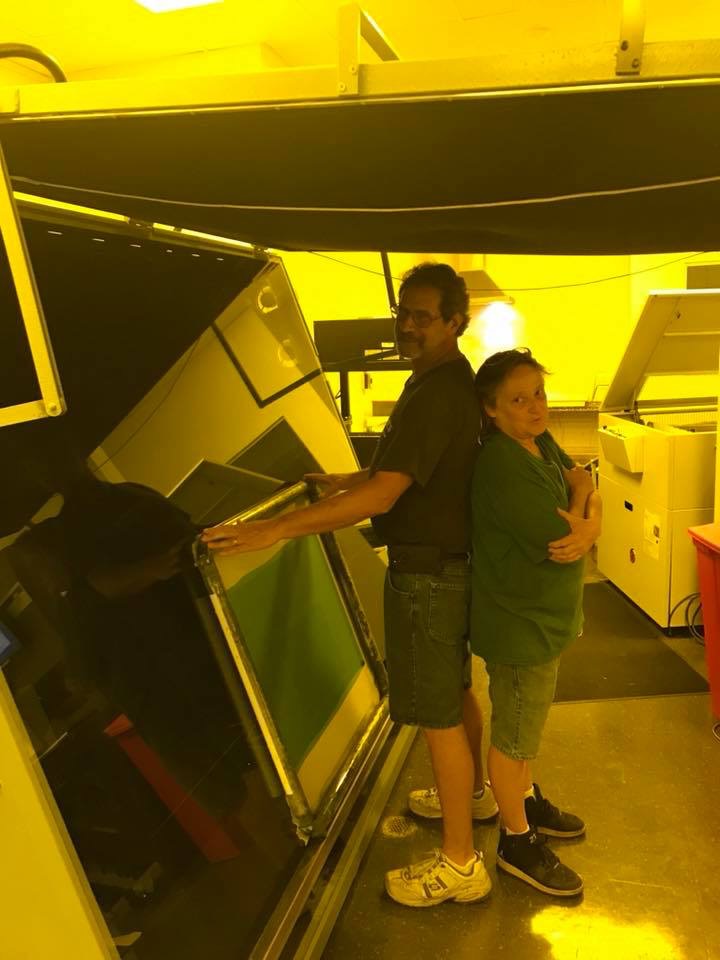
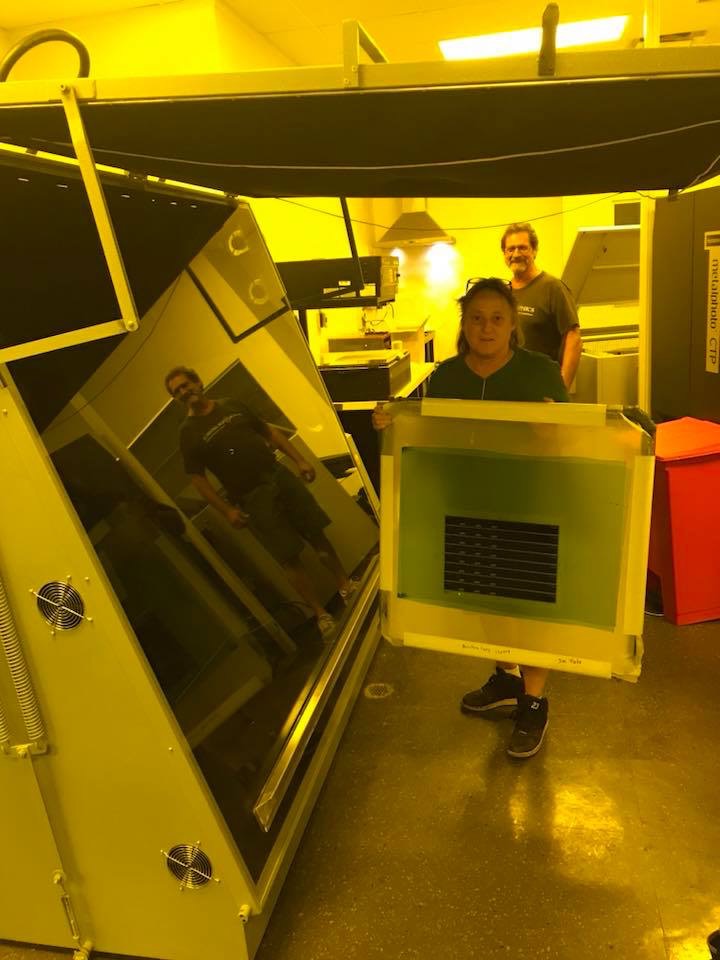
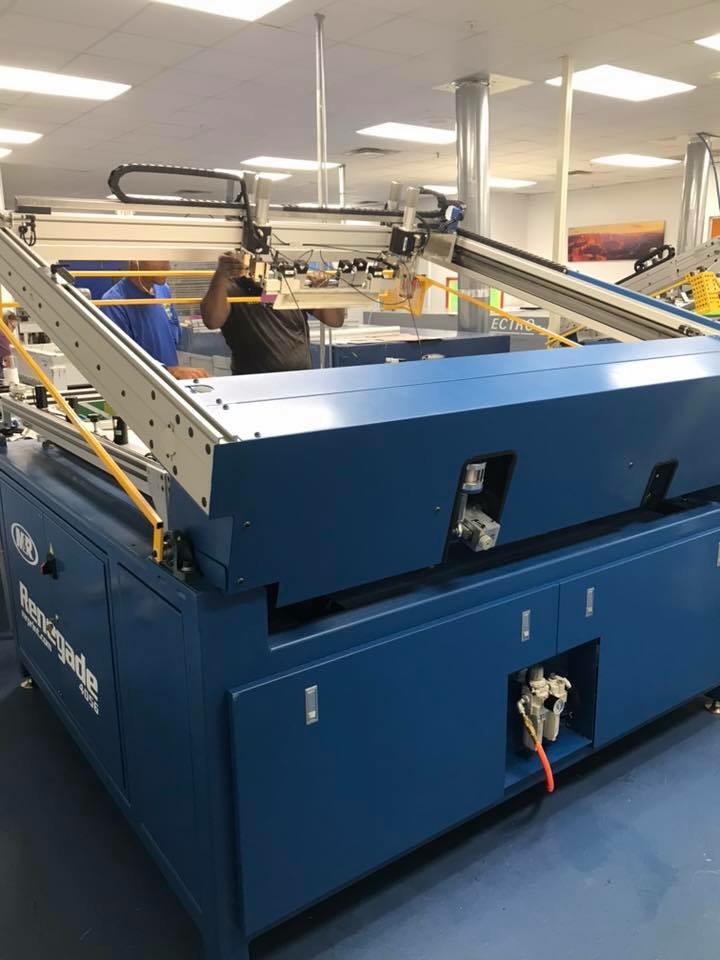 Data Graphics isn’t just adding new equipment, we are expanding our capabilities. Each opportunity that we receive from our customers are carefully studied for the best printing and cutting methods. With requirements changing all of the time, Data Graphics must continue to invest in our machinery, as well as providing training for our employees. Earlier this year, we updated our Metalphoto equipment. However, this recent investment of equipment is to increase our size capabilities. For too long, we have had to turn away opportunities that were dimensionally too large…no longer! While we have a 4 ft x 8 ft wide format digital press, we have been limited on the materials that we can produce on this press. Now we will be able to print 40″ x 50″ and if we are going to print larger, we need to be able to cut larger….we will be maxed out there at 32″ x 47″. Our exposure unit was first installed, this is used to make the screens for our larger and existing printing presses. The new screen press was delivered last week and we are proud to report is already producing your printed products! The new die press will be another month, we have to make some room for it. None of this would be possible without the relationships that have been built and the opportunities presented. Thank you from all of us at DG!
Ross Shepherd, 30 Years with DG
June 2018 - Governor's Sterling Council Award Finalist...Runner Up
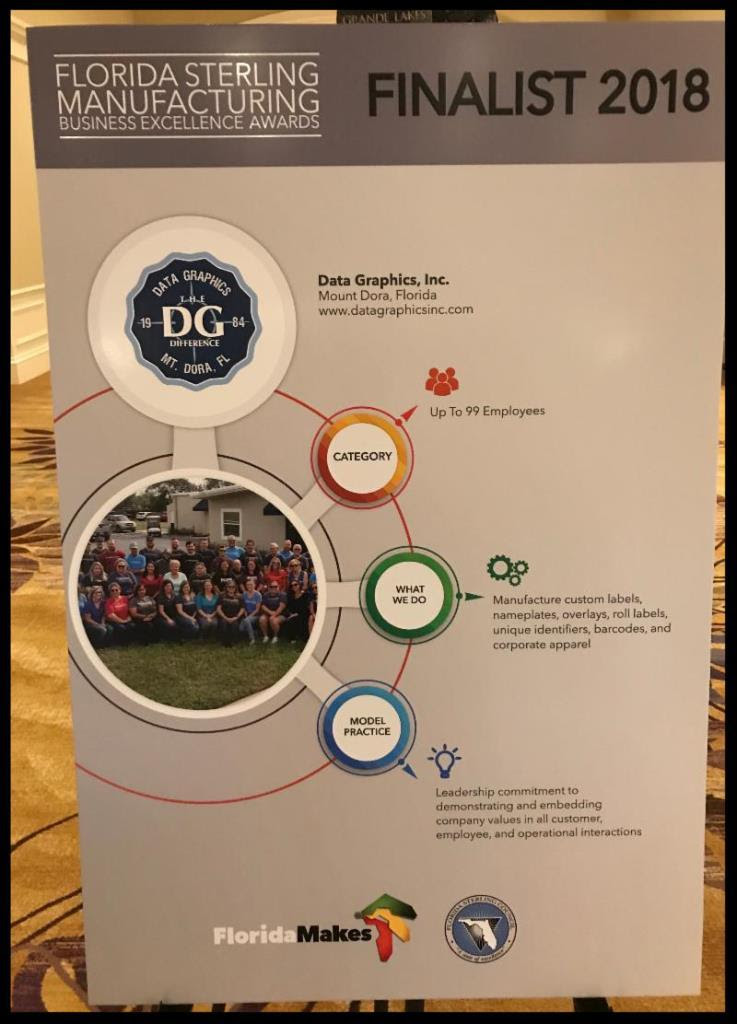
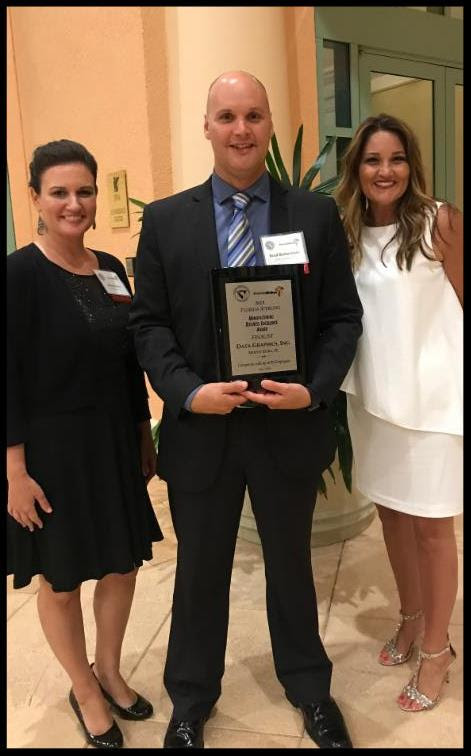 Data Graphics was among a highly select group of Florida manufacturing companies to be recognized for excellence as part of the Florida Sterling Manufacturing Business Excellence Awards Program. The Florida Sterling Council and Florida Makes collaborated on this statewide recognition. Companies were judged on leadership, strategic planning, customer and market focus, measurement analysis and knowledge management, workforce and operations.
Data Graphics went through multiple phases of judging after being nominated earlier in the year for this prestigious award. A site visit evaluation took place in February and included a panel of judges and examiners taking a tour through our facility along with a questions and answers session at the end. President Brad Butterstein, Vice President -Sales, Buffy Carroll and Sales Engineer Alissa Vance represented Data Graphics at the annual awards banquet at the JW Marriott in Orlando, FL on June 1st where they were announced as Runner Up for the Manufacturing Business Excellence Award. All of us at Data Graphics are very proud to be recognized among Florida’s top manufacturing firms.
March 2018 - A Longtime Partnership...
A LONGTIME PARTNERSHIP
Buffy attempting to fly the C-130
Data Graphics doesn’t just want to be your choice custom printed product solution, we want to partner with you. For over 30 years, Data Graphics and Rockwell Collins have done just that. Last month, Buffy Carroll, VP of Sales and Mike Welter, Owner visited the Rockwell Collins corporate headquarters and attended the RC Supplier Conference. This event includes suppliers from all over the world, RC leadership, promotes supplier engagement and celebrates exceptional supplier performance. We learned the direction RC is taking in the upcoming years and what we can do to support that effort. DG was also visited by the Quality Assurance Team from RC and we all took a pledge together, “I STAND FOR QUALITY”. We thank RC for many years of building relationships, creating and sharing opportunities with DG so we can continue to grow together.
If your company would like to visit DG or have us attend a supplier event, let us know…click here!

Future F-35 Pilot. The helmet looks to be a perfect fit.

RC visits DG… “I STAND FOR QUALITY” pledge is well underway at DG.

Mike trying out a little Virtual Reality Distance Learning.
January 2018 - New MetalPhoto Printer!
TAKING THE NEXT STEP TO REDUCE STEPS…
INTRODUCING THE NEW METALPHOTO CTP & MODEL 80
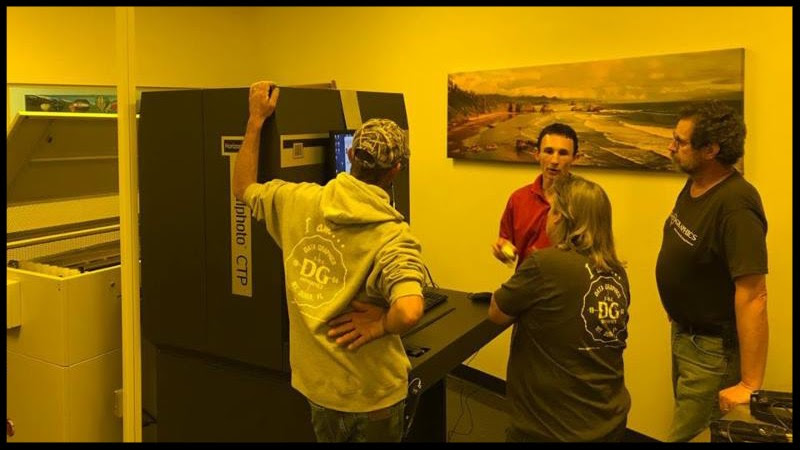
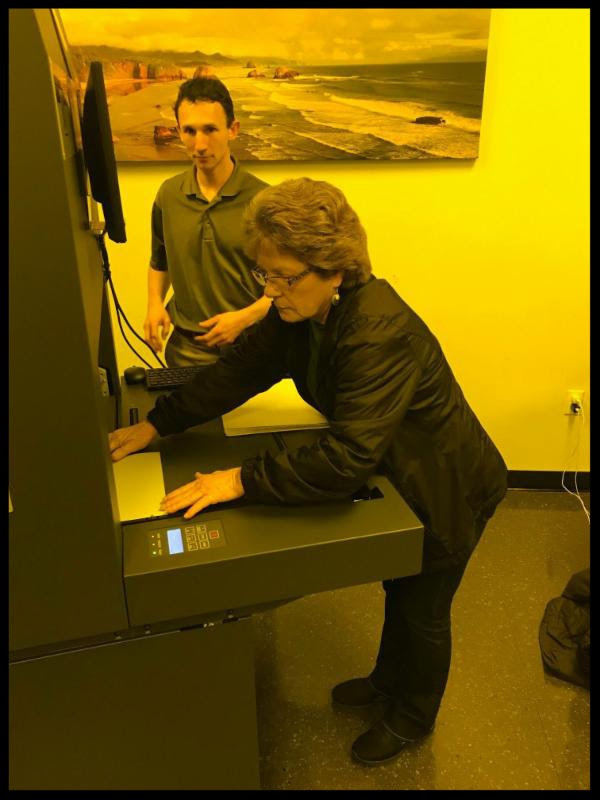
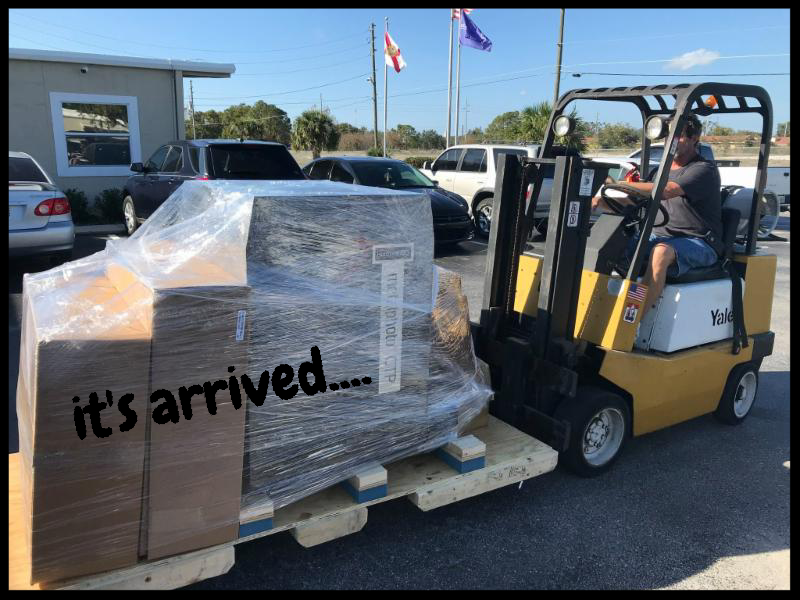 Data Graphics is moving on up….we recently took delivery of some new equipment that will enhance our metalphoto process. Our relationship with Horizons goes back over 30 years. Their team came down from Cleveland and assisted in the setup and training of our new machines. The benefit of this new machine is that it reduces steps in several areas. The original machines required films…..to process an image on photosensitive aluminum, however this machine does not. If you think about barcodes and serial numbers, we have to have a film that includes serial numbers/UID barcodes…if your quantity was more than one sheet would yield, that’s right we have to print multiple films and expose each one to a sheet of aluminum. Another advantage to the new machine is the sheet gets fed through the machine (Liz, our Director of Mfg is displaying) and then goes straight into the processor and developer, fresh water is fed into the machine for a final rinse. Metalphoto is an ideal material for labels and nameplates that need long-term durability, exposure to salt spray, providing corrosion, sunlight, abrasion, temperature and chemical resistance. Data Graphics can offer this photosensitive aluminum in thicknesses ranging from .003″ – .125″ thick.
Contact the DG Sales Team to learn about on Metalphoto
Are You on the Bus?
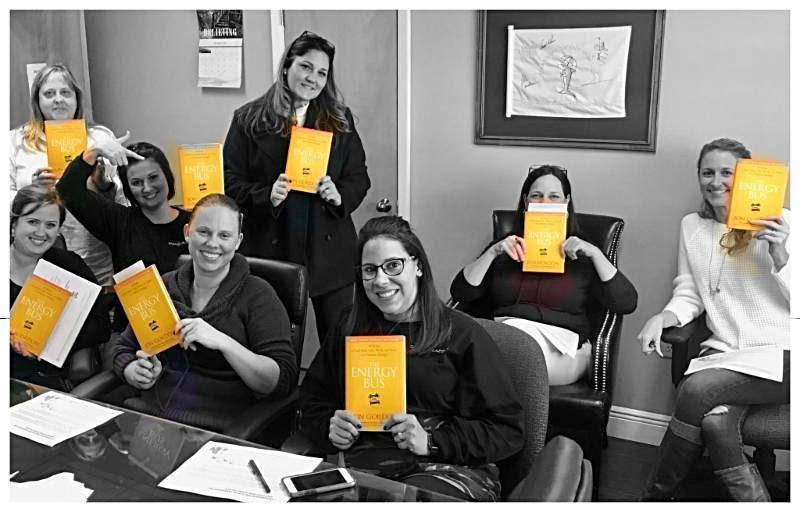 For the last 2 months our entire sales team and mgmt team participated in a team building exercise. We read aloud the book, The Energy Bus. The book is a journey that reveals 10 secrets on living a positive life, how to approach life and work situations and forward thinking. All of us were able to relate to situations in book as well as some of the characters, often calling each other out in our gatherings.
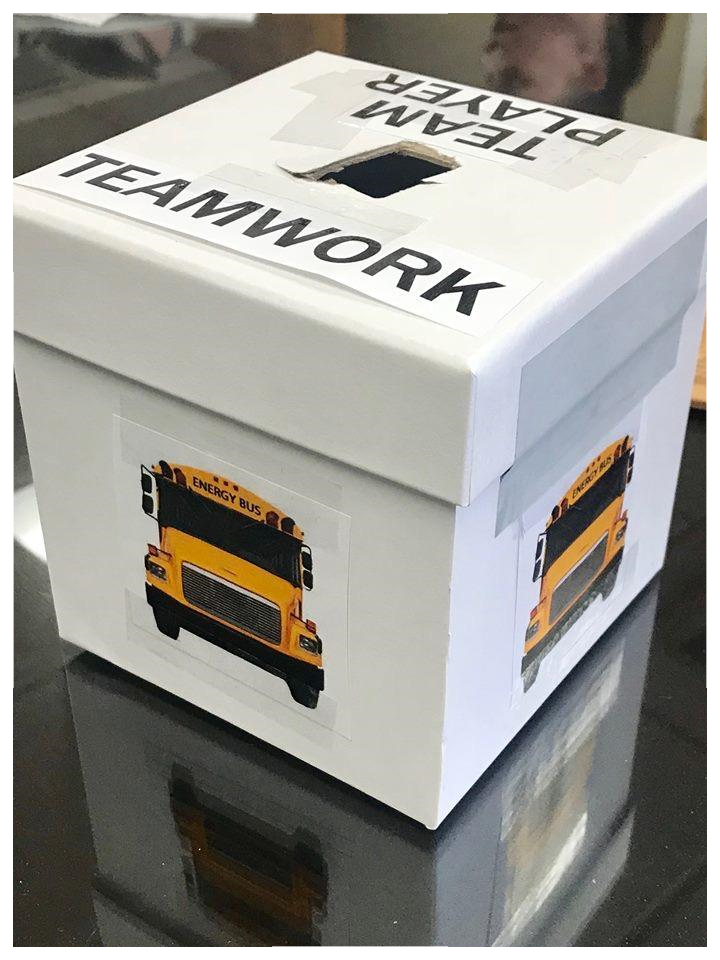
A positive note we shared about our team members.
At the end of the book, our team met once more and created vision boards together….this team dynamic we have here at DG is not one you just see in photos, it’s a real appreciation and level of respect we have for one another. Investing in each other, our DG teammates is the DG Difference!

DG Sales Team
October 2017 - Irma and Halloween - Oh My...
Irma and Halloween – Oh My…
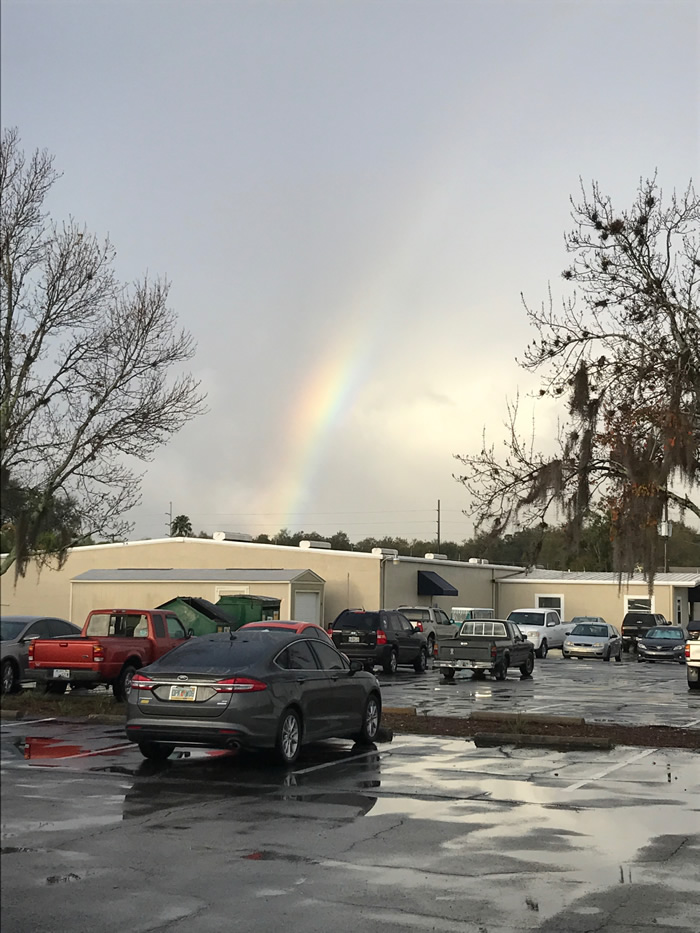 Irma blew through fast and furious, and left us with a mess to clean up, but thankfully all of our employees came out of the storm safe. As a Category 1 when it passed over, it was still a very scary storm as there were multiple tornadoes and very high winds starting from 7pm Sunday and through the night.
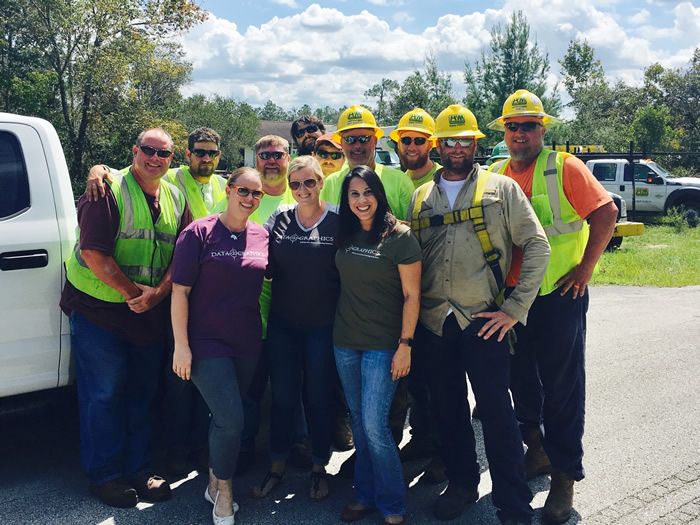 Here at Data Graphics though we were lucky to have no damage, however we were without power for 3.5 days. Our employees ranged from not losing power at all, to being without power for 10 days. Some had major roof damage, while others had limbs to clean out of their yards. We did recover quickly, as we tried to prepare for not being at work for a few days, and got as many orders out early that we could. A handful of our DG Sales Team members made sure the lineman traveling from Tennessee to restore power to our county were fed.
We were happy to be able to start October back on track. All of us at DG thank our customers that reached out and stood with us while we worked through catching up on what we missed while we were closed.
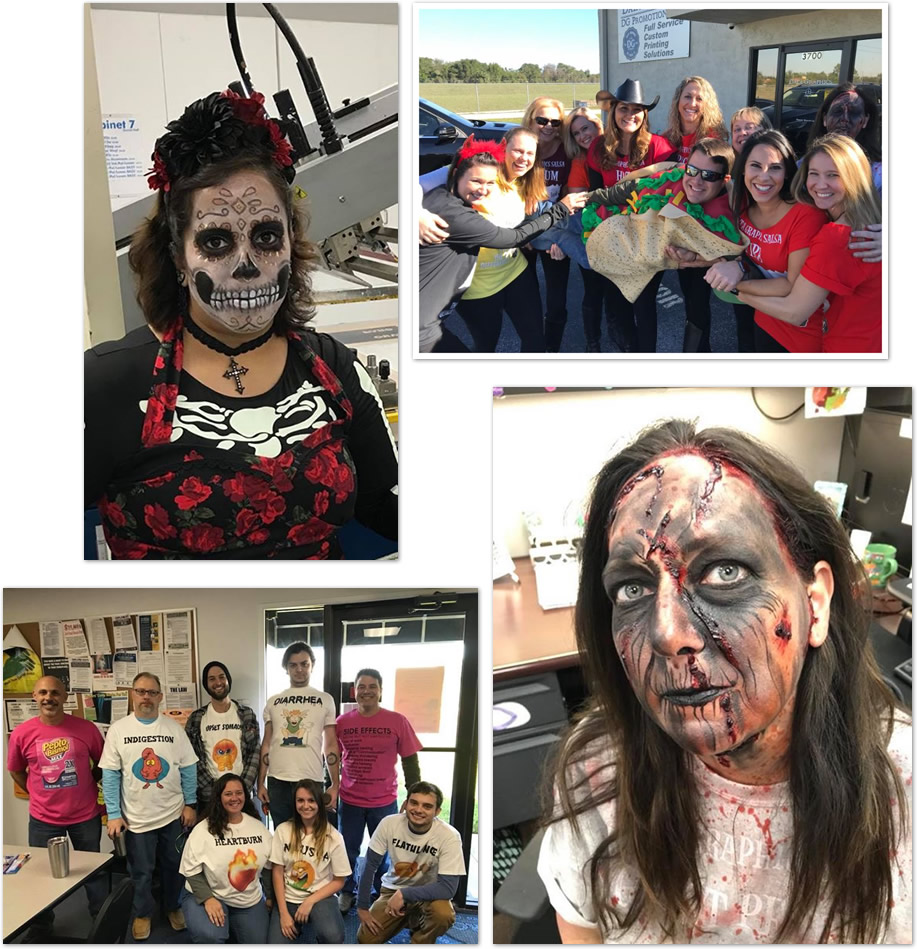
Data Graphics always host an annual Halloween Costume Contest along with treats for our DG Family. Our participation this year includes the sales team, who represented our Hot and Spicy expedite list…a few of the flavors were Mild, Hot, Verde, Spicy, Blazin, Fire and Diablo….we had 11 total. Our sales team strength is evident as they held up owner, Mike Welter who they forced into a Taco costume. Melissa Rye, one of our graphic artists and Indigo press operators was from the Day of the Dead. Stacy Kimball, while she was part of the sales hot and spicy team, she was the “Ghost Pepper Sauce”. Our promo production team represented the Pepto Bismol bottle and the side effects. Halloween is always a fun time at DG….never long enough, as it’s the end of the month and we have your orders to ship! Have a safe and happy Halloween!!
August 2017 - Happy Retirement Connie Aldridge!
Happy Retirement Connie Aldridge!
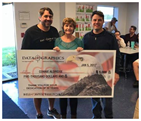
 Connie Aldridge has been a part of the Data Graphics family since January 1987. Today, August 31st is her last day and she will be missed by many. In her 30+ year career at DG, she was a critical part of the sales team. Connie built many amazing relationships with our customers and has left a legacy, with big shoes to fill. Her and her husband Mick, spent many years for this day, she has recently completed building her dream home on a lake that they refer to as their Yalaha Paradise. They have lots of plans to travel across the US as well as to Ireland. Connie…thank you for the many years you gave to DG, we love you and will miss you! Click here to see a video in Connie’s honor, includes messages from her co-workers, customers and friends.
June 2017 - A Special Delivery & Welcome UCF Professional MBA Program
A Special Delivery…
Data Graphics had a very special delivery early June, a long awaited new press that will continue to enhance our capabilities.
Our commitment to the customer includes continuous improvement and by adding this new roll label press to our expanding list of technology and equipment we are providing just that!! Our new press is a 4 color process digital roll press and will expand our roll label department where we also provide Flexography, Hot Stamp and Thermal Printing. This press will eliminate the “plate charge” you may have experienced in the past. Variable printing such as serialization and barcoding are also available. Our new press, that our sales team has named “Hemsworth” as they are already in love, can print on materials such as: polyester, polypropylene (BOPP), paper and vinyl.
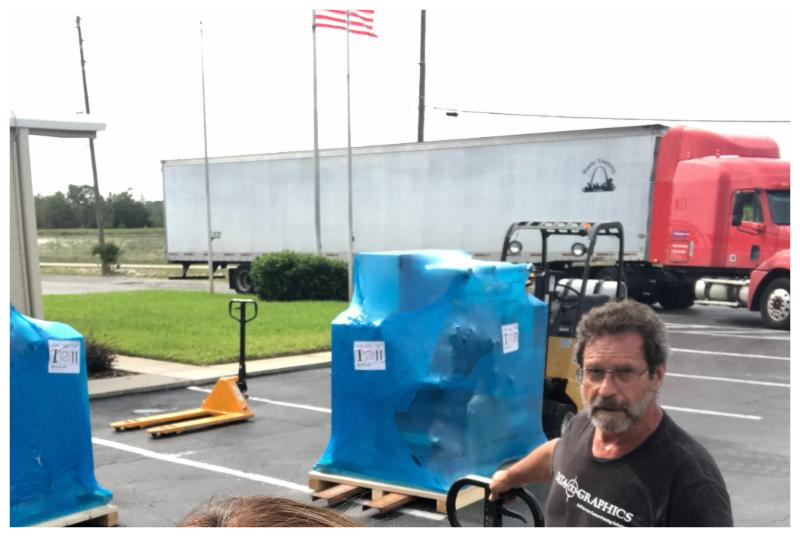
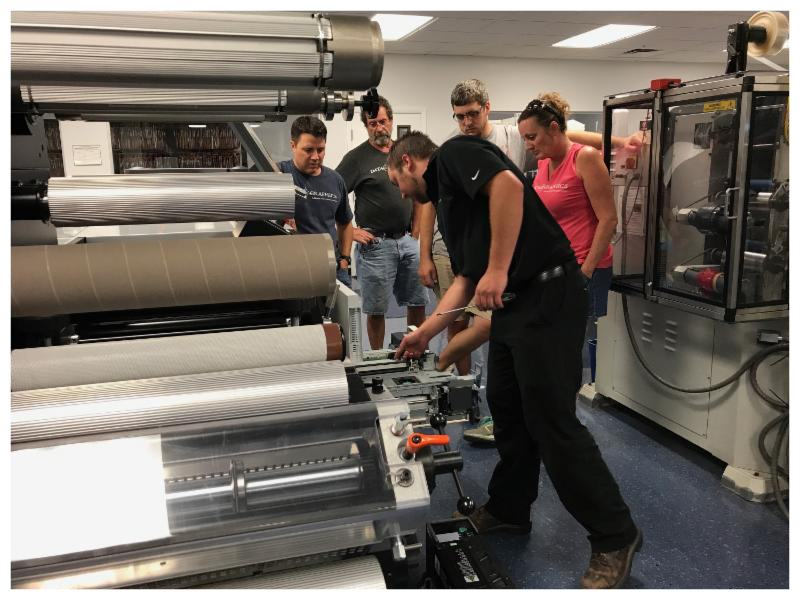
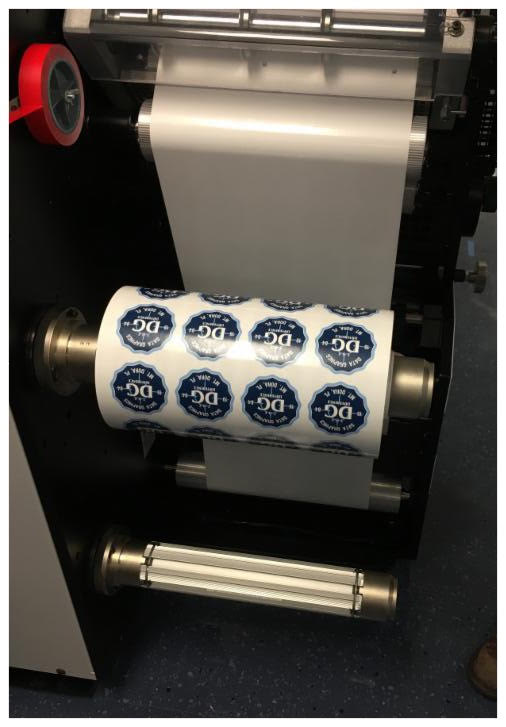
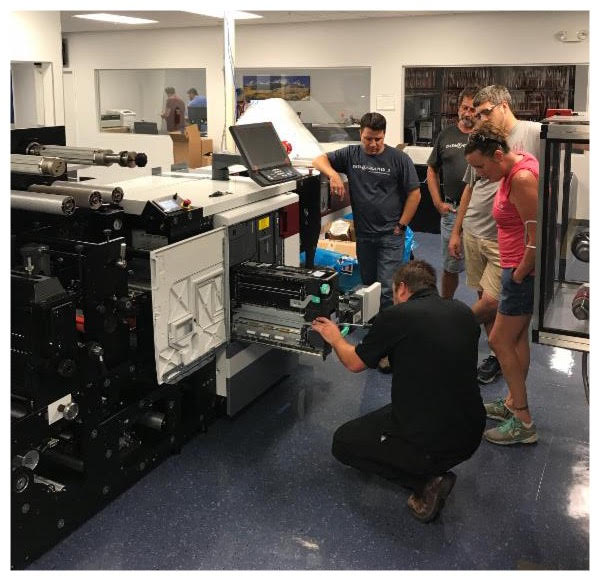
Extensive training has been provided to our roll department team members by the manufacturer as seen in the photos. All of us are very excited about the COLORFUL and unlimited opportunities in our future!
Click here to learn more about roll
 Welcome UCF Professional MBA Program
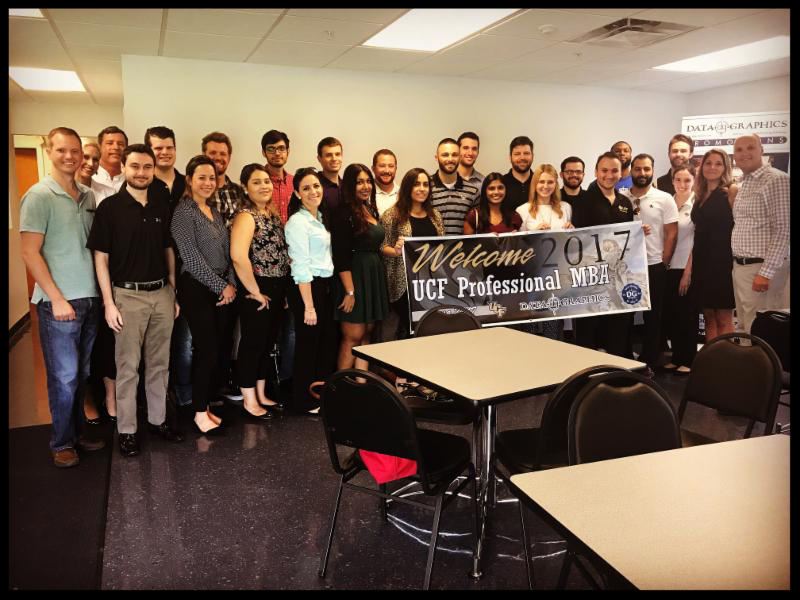 Welcome UCF Professional MBA Program
Data Graphics recently hosted UCF’s Professional MBA Program at our facility. Dr. Porter and Dr. Francisco, who we have worked with over the years include a visit to our facility as part of their coursework. The exposure of small business and manufacturing is invaluable for our up and coming business professionals. DG provided a full tour of our facility, explanation of ISO/AS9100 Quality System Procedures, interaction with our team members and a question and answer session throughout. Partnering with our community through our local schools and colleges is all part of the DG Difference.
April 2017 - Patriotic Employer Award Goes To...
Patriotic Employer Award Goes To…
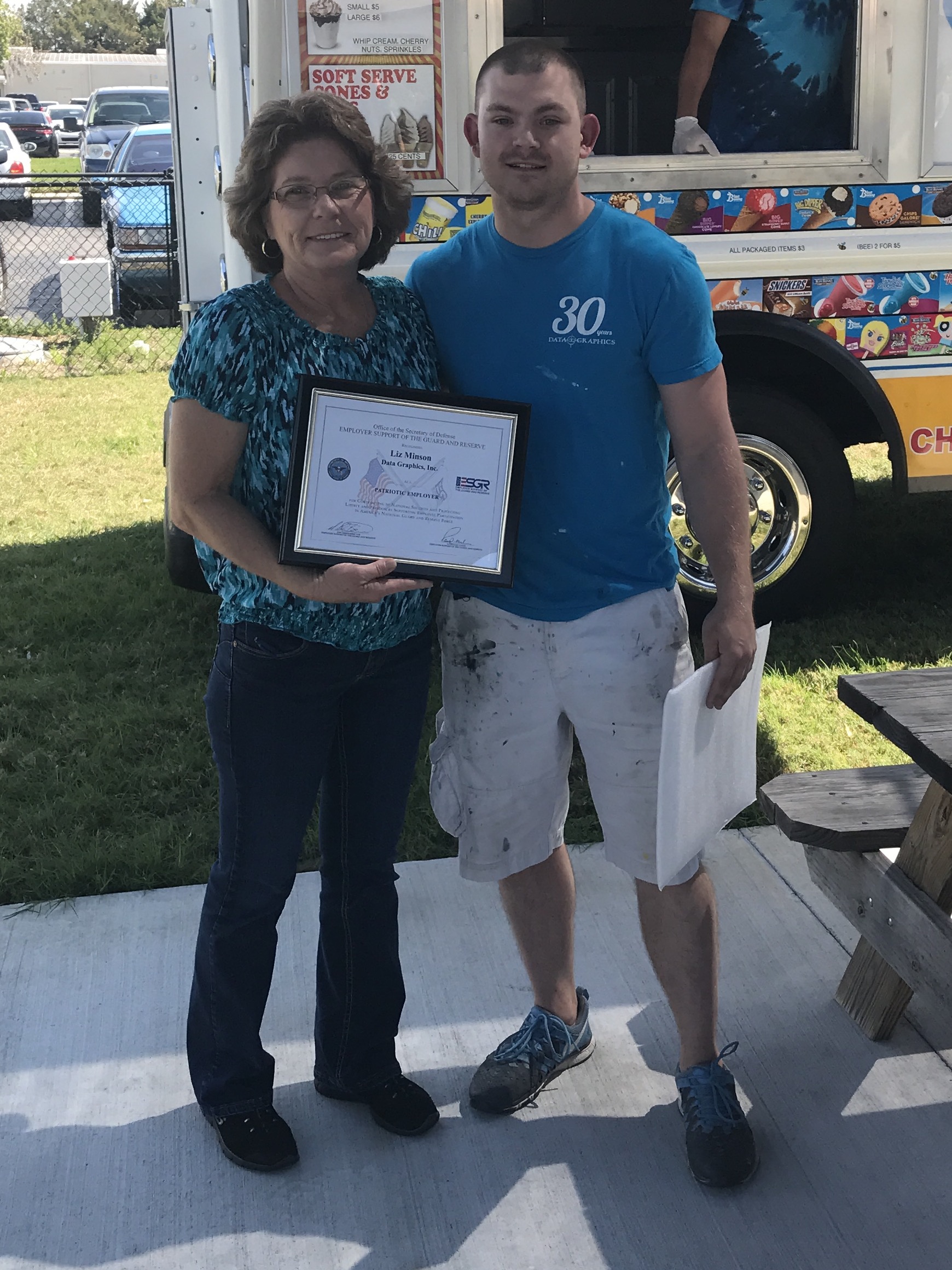
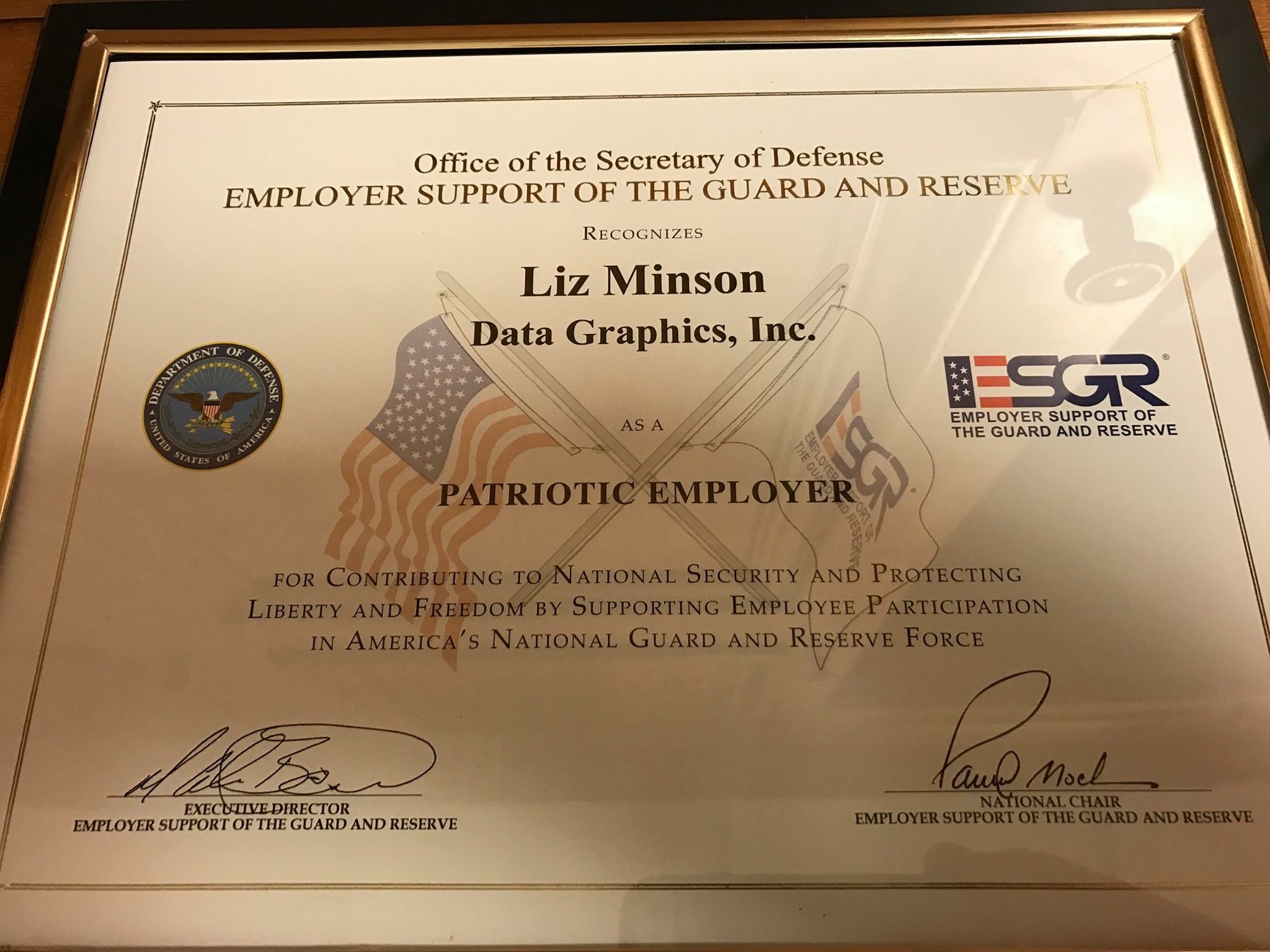
The DG Difference at it again!!
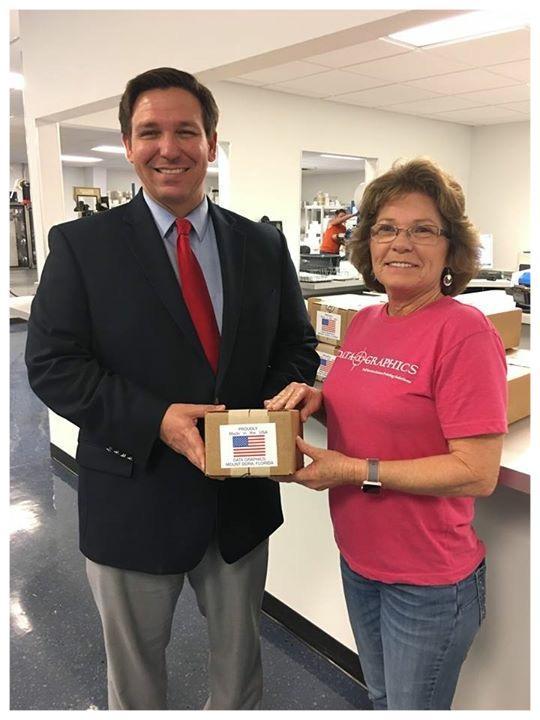
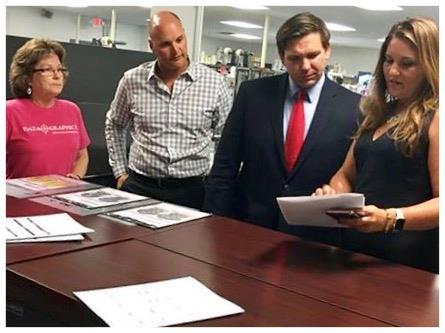
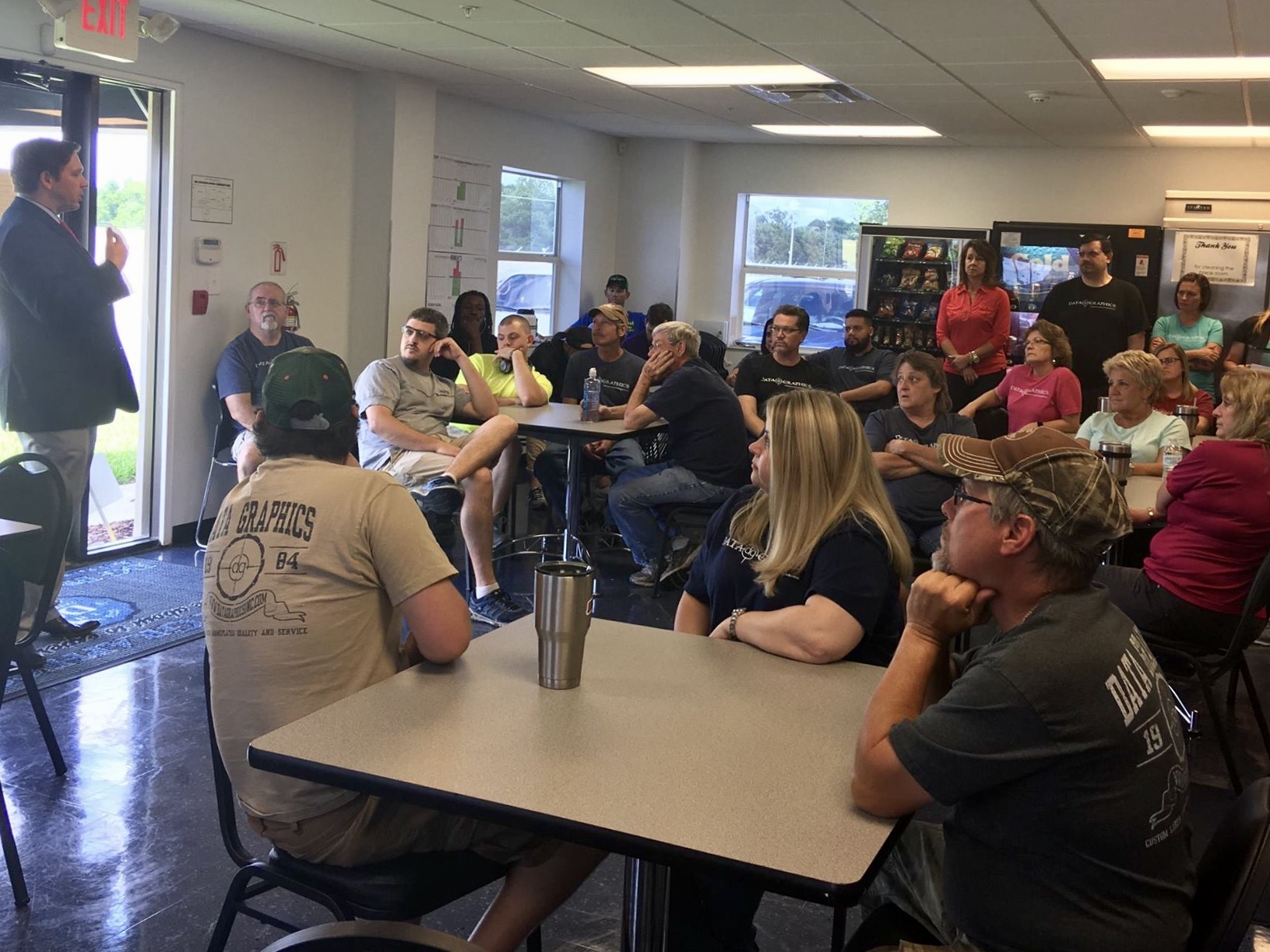
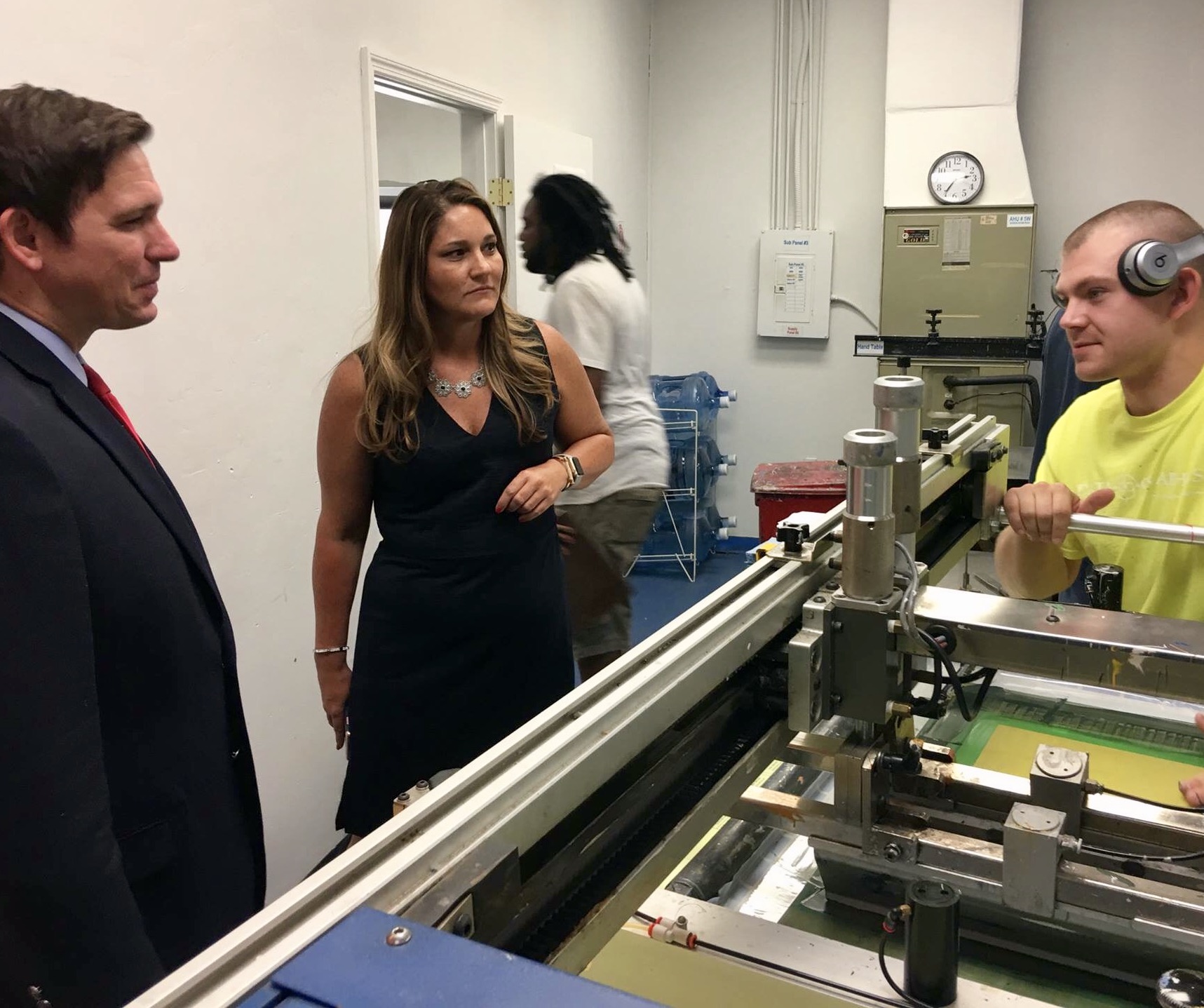
Congressman Ron DeSantis Visits DG
Data Graphics was very proud to have Congressman Ron DeSantis , United States Representative for Florida’s 6th District tour our facility this month. As a small business, we see costs rising and it was a great day to be able to get our points across to the Congressman. Congressman DeSantis met with several employees on his tour of our facility and held a town hall at the end of the day.
March 2017 - Got Ice Cream?
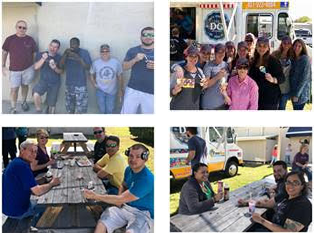
Happy DG Team Members = A Great Workplace = Quality Products = The DG Difference
February 2017 - Twins & Inauguration & New Training
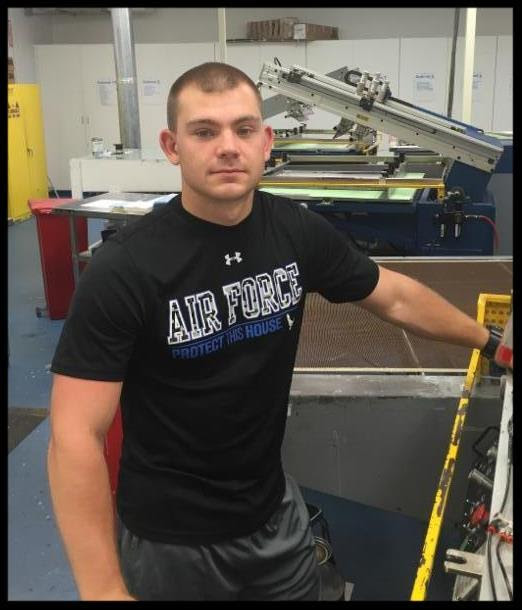
Thank You Josh!
Data Graphics celebrates one of our team members, Josh Gee and his accomplishments outside of DG. Josh is a screen press operator at DG, but he’s also a Staff Sergeant with the United States Air Force. Josh was sworn in as a Federal Officer this January and was part of the Inauguration of our 45th President, Donald Trump. His squad of 13 is seen in the below photo. The National Guard was represented from 32 states.
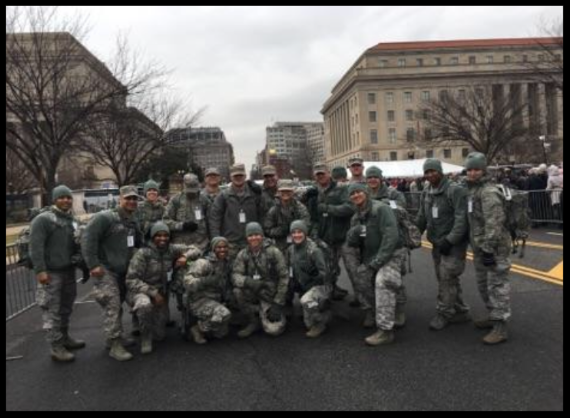
Thank you Josh, not only for being a dedicated DG team member, but for the service you provide to our country and the American people.
Time is flying and so is our team.
Data Graphics is committed to another amazing year, full of growth and positive changes. New equipment has already arrived, 3 new employees have been hired this year and our sales and admin team have already completed a certification in Excel. Investing in our people is what it’s all about, all of us are very excited about the direction and plan for 2017!
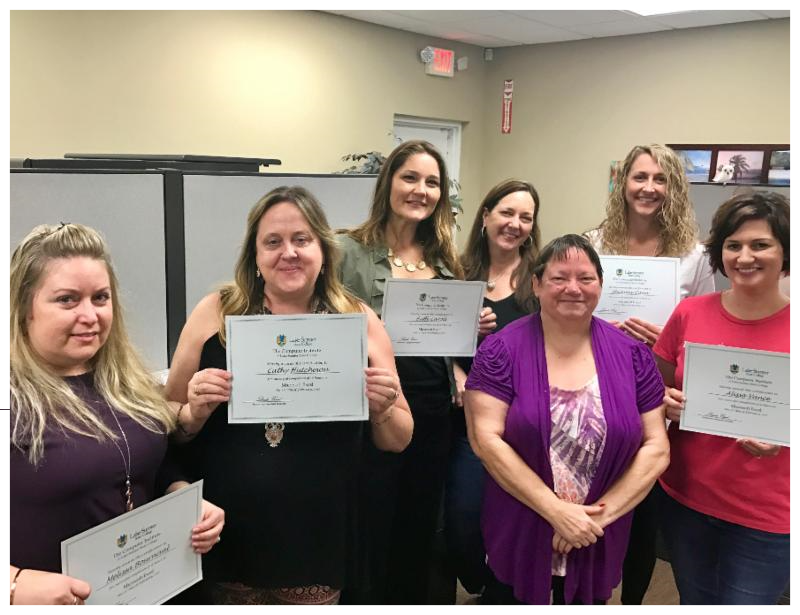
Melissa (HR/Admin/Acct), Cathy (Sales), Buffy (Sales), Stacy (Sales), Linda (Instructor), Shianne (Sales), Alissa (Sales) and Penny and Lisa (both Admin/Accounting) not pictured.
Growing, Growing…We have Twins!!
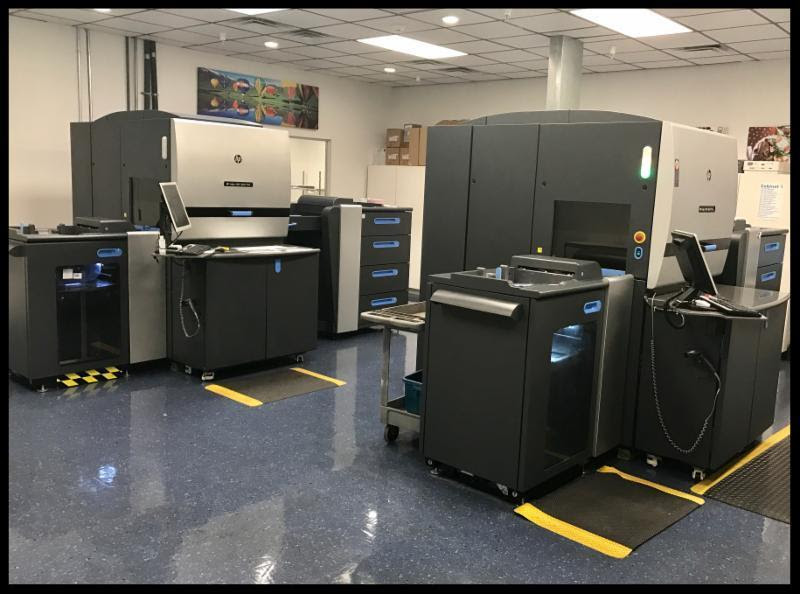
Data Graphics is committed to growth and taking care of the customer. Last year, we experienced an overflow on our HP Indigo 5600 Digital Press, mixed with some hurricane material delays…calling the customer to let them know we will be late on an order is never one we want to make. So this February, we added another digital press. All of us at DG are ready…polycarbonate, polyester, vinyl, paper and a handful of other materials!!
January 2017 - 30 Years of Dedication!
As Data Graphics turns 33 this year, a select few of our DG Team members celebrate milestone anniversaries. So far Data Graphics has had 4 employees hit the 30 year mark. Recently, our very own Connie Aldridge (Sales) celebrated her 30th as well as Miss Annie Mitchell (Assembly)…both seen in the photos below with owners, Mike and Bobby Welter.Connie celebrated 30 years this January and was presented in front of the entire company, with her husband Mick hidden in the audience.
Annie celebrated 30 years this past November. She drives an hour to and from work every single day!!
Our team at DG is thankful for the recognition and other benefits provided to us by our amazing company!
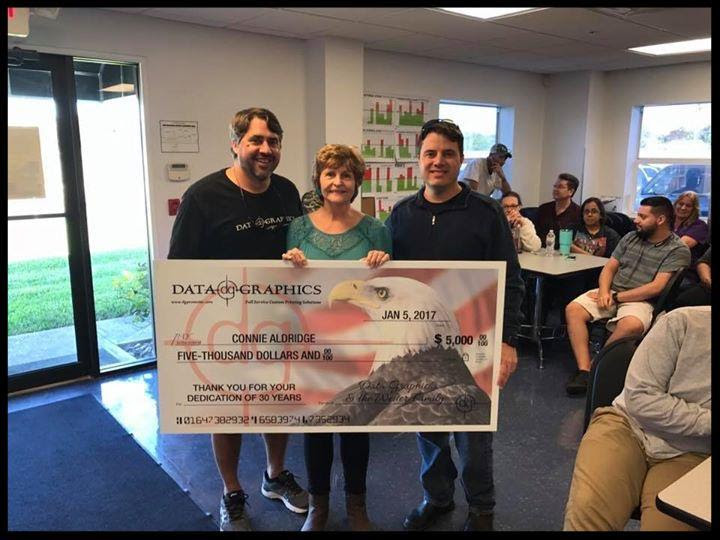
Bobby, Connie and Mike
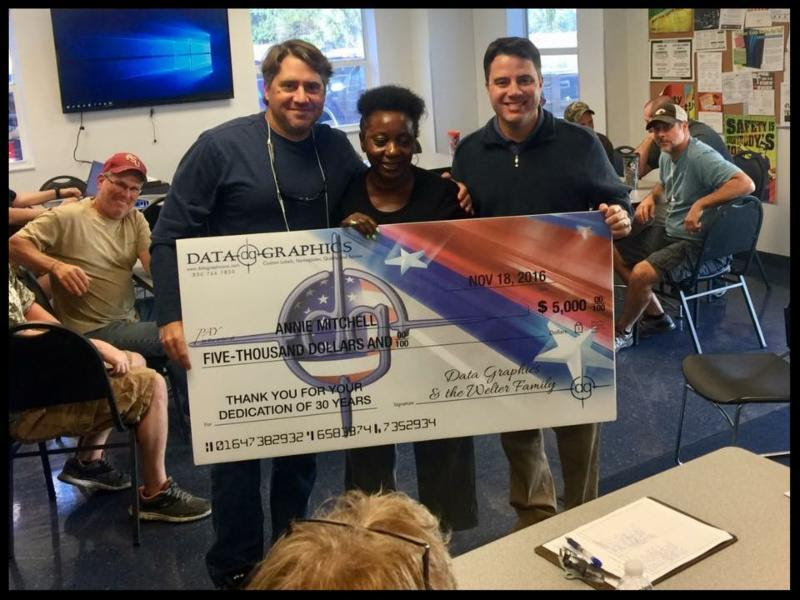
Bobby, Annie and Mike
_____________________________________
Data Graphics – Committed to the Community
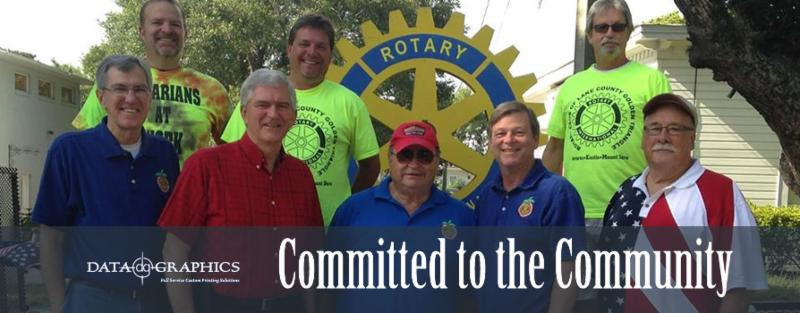
Data Graphics, Inc. is committed to supporting the community in which we live, work, and play. Our employees live in Lake County/Central Florida and are involved in various organizations which make a difference in the lives of many in our area.
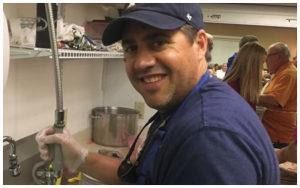
Bobby in the church kitchen
December 2016 - Happy Holidays!
Merry Christmas and Happy New Year!
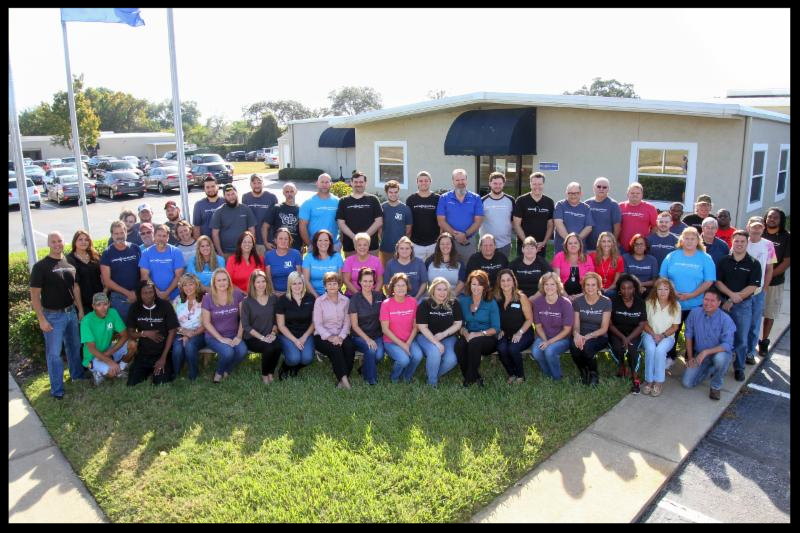
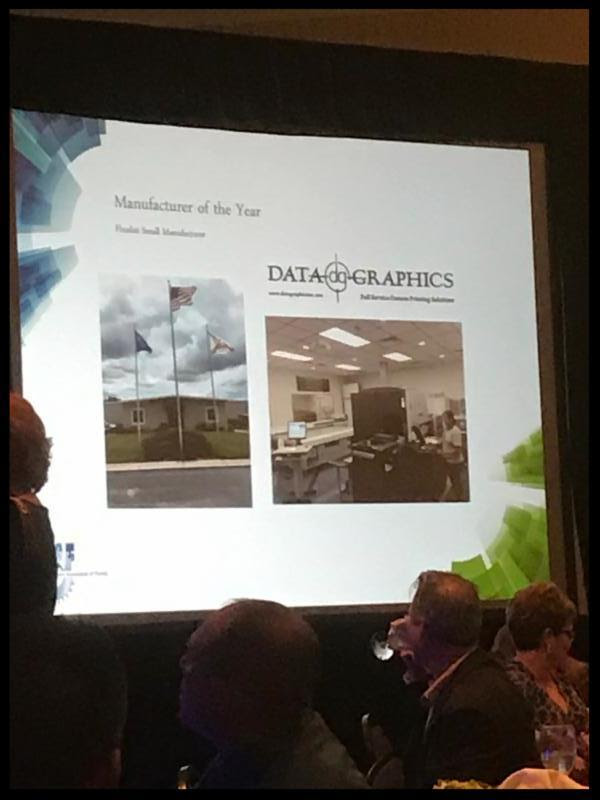
November 2016 - Manufacturer of the Year Florida Small Business 2016

CONGRATULATIONS TO OUR DATA GRAPHICS TEAM
Thank you to our customers, as we could not have done this without you!
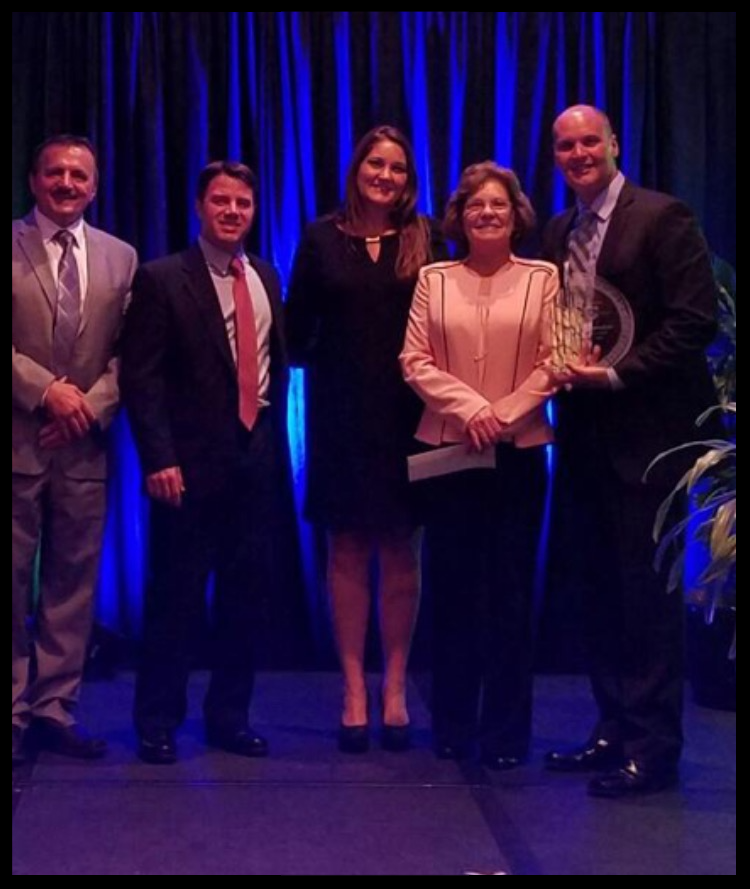
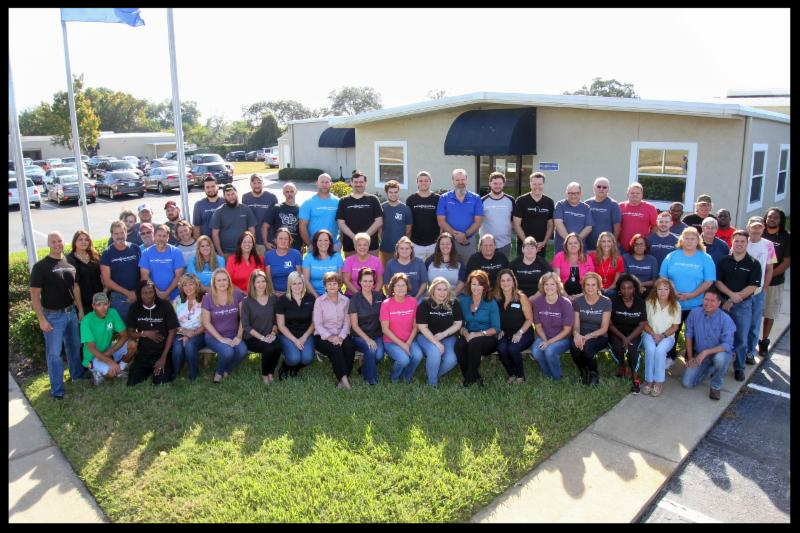
October 2016 - Happy Halloween from Data Graphics!
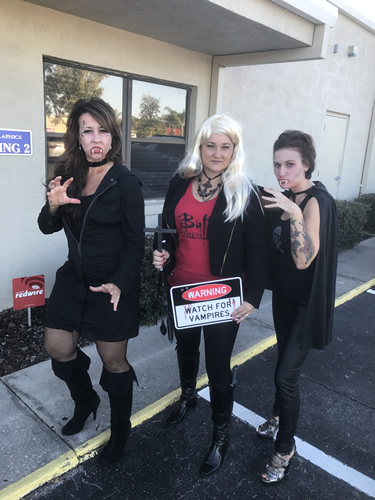
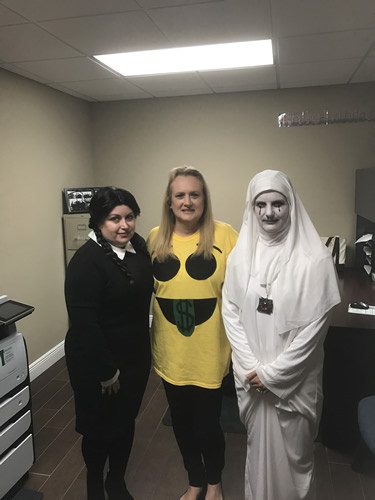
 All of us here at DG enjoy the festivities that go along with Halloween, especially the candy and the creativity! Our participants this year were very creative and enthusiastic! Emily (Crazy Cat Lady) took away the “Most Creative” award. Jason (Scooby) for “Funniest” Costume. And Penny (Dead Nun) was definitely the “Scariest”. Also participating in our costume contest was Melissa (Wednesday), Lisa (Money Emoji) and your Vampire Team, Alissa (Vampire) , Buffy (The Vampire Slayer) and Jacquelyn (Vampire).
Thanks to all that took the time to participate and make this Monday and last day of the month more enjoyable!!

August 2016 - Hot Summer!
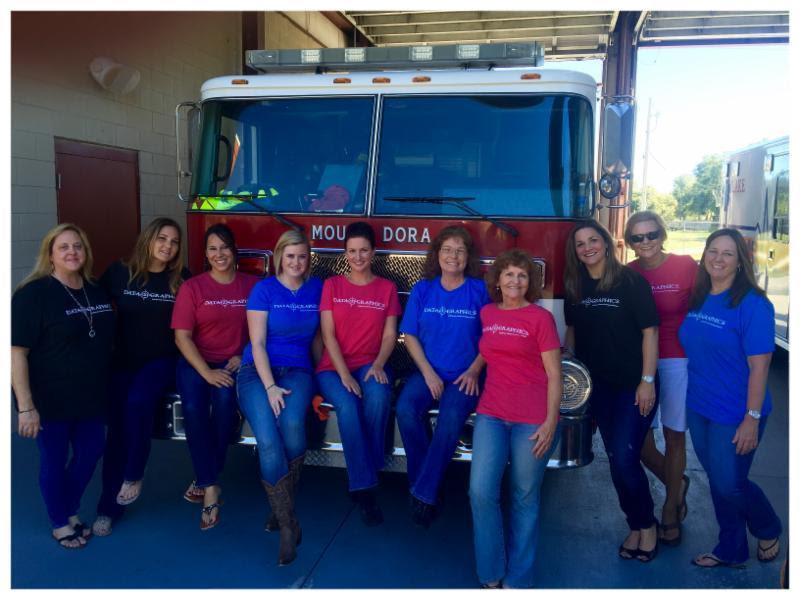 A long, “hot” summer…. but WOW that has not slowed down our customers or DG. Us Floridians are used to this heat, but just in case, our local Fire Dept is located directly behind our building!! Our experience and knowledgeable team continue to get your “hot” orders out prior to our typical lead time of 10 working days. Have a printed need and need it quick, send it over and let us put that fire out for you!!

DATA GRAPHICS WILL BE CLOSED IN OBSERVANCE OF LABOR DAY, MONDAY, SEPTEMBER 5TH.
July 2016 - Data Graphics is a Top 6 Manufacturer in Central Florida
What an exciting year this has been with all of the recognition by our customers, suppliers and the Central Florida community. Data Graphics is once again among the rankings as a top Central Florida Manufacturer, climbing to number 6. Our core values continue to separate us from our competition. Data Graphics thrives on the building of relationships through trust, honesty and a quality product that arrives on time, and at a fair price. It all goes hand in hand; with DG you get it all–not to mention great communication and service from your sales team. If we are not performing, we want to hear about it. Many of our customers send us monthly scorecards to let us know how we are doing, with quality and on-time delivery being measured. Did you know we also score ourselves? Each week, our on-time delivery exceeds 96%, while over 60% of our orders ship before their deadline (if the customer allows early shipping). In addition, DG has a profit sharing program where our employees earn bonuses based on our limited returns and our internal scrap. The attention we have paid over the last 32 years to quality, customer satisfaction, and on-time delivery (in addition to having the experienced, knowledgeable staff that can make the solve problems when they do arise) make us the best full-service custom printer in the world!
June 2016 - Celebrating the Rockwell Collins Platinum Supplier Status
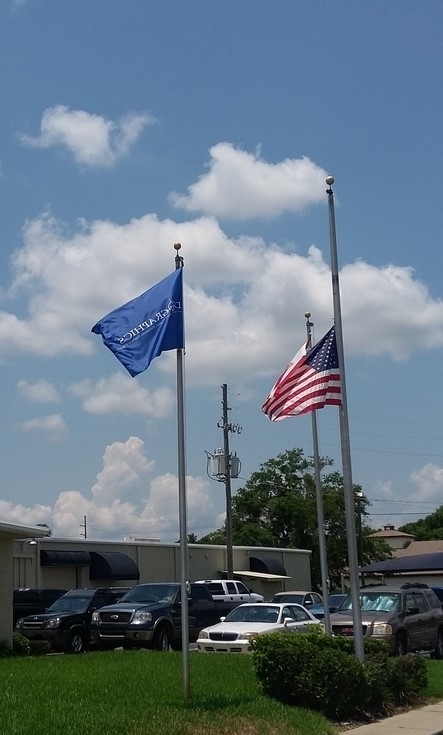
Our Flag at Half Mast in Memory of Those Lost in the Orlando Shooting
6/12/16 – Out thoughts and prayers are with all of those effect by this senseless tragedy downtown. #OrlandoStrong

(L-R) Kit, Becky, Shane, Liz, and John just before we hang the Rockwell Collins Platinum Premier Supplier banner.
6/10/16 – We wrap up our online celebration week celebrating the Rockwell Collins Platinum Supplier Status. Thanks again to our incredible team and to our great friends at Rockwell Collins.
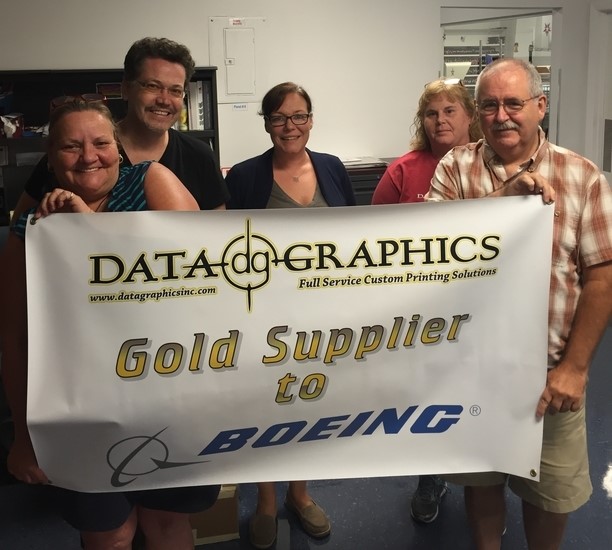
The Art Department and Purchasing, (L-R) Pat, Weller, Rebekah, Karen, and Paul, enjoy winning the Boeing Gold Supplier Award.
6/9/16 – Our Art Department and Purchasing Department are posing here with the banner commemorating our Gold Supplier Status with Boeing. To achieve Gold Status we sent nearly 19,000 individual UID’s, nameplates, overlays and labels without a single late shipment, or defective part…or, as the Art Department would point out, without a single mistake on the artwork. Thanks again to our great friends at Boeing and to the fantastic art and purchasing team.
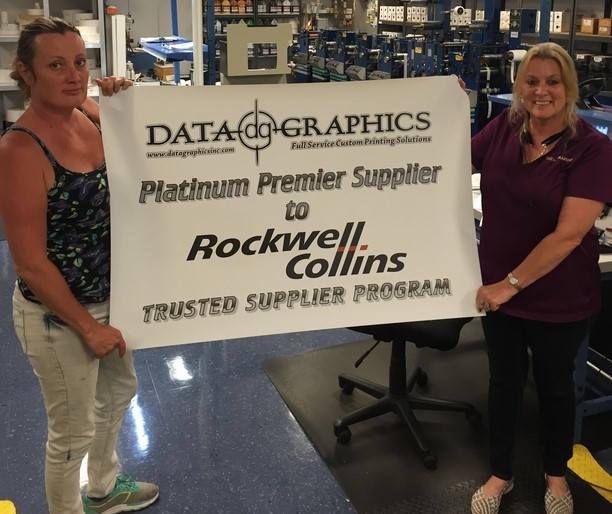
(L-R) Jen and Alisa do the bulk of our roll label printing, and helped earn the Rockwell Collins Platinum Premier Supplier award.
6/8/16 – We are at the mid-point of our online celebration week. Jen and Alisa, who handle the bulk of the roll label printing, show off the banner commemorating our Rockwell Collins Platinum Premier Supplier recognition. Thanks to the roll label ladies, and Rockwell Collins for this honor.
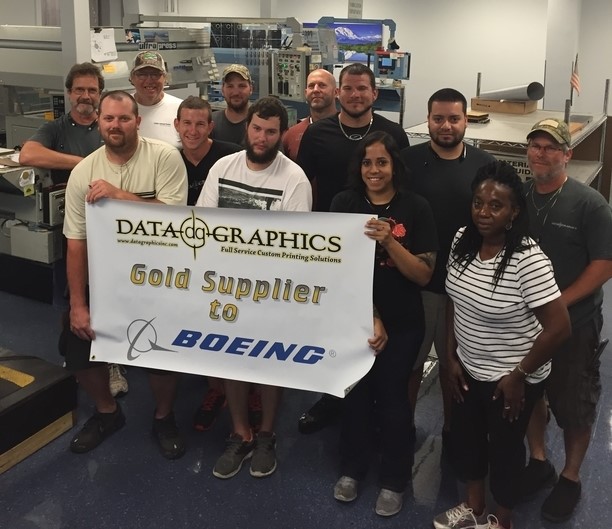
The Fabrication and Digital Team, (Front L-R) Michael, Jason, Wayne, Melissa, Annie, (Back L-R) Earl, Ross, Eric, Jeff, Shane, Chris, Tony
6/7/16 – Celebration week continues here at Data Graphics. Here is the fabrication and digital team celebrating receiving Boeing’s Gold Supplier Award, the highest level rating they give their suppliers. This is an incredibly elite award. At any given time, typically 100-150 of Boeing’s 13,000 suppliers achieve Gold status. Thanks to Boeing, and our rocking fabrication and digital team.
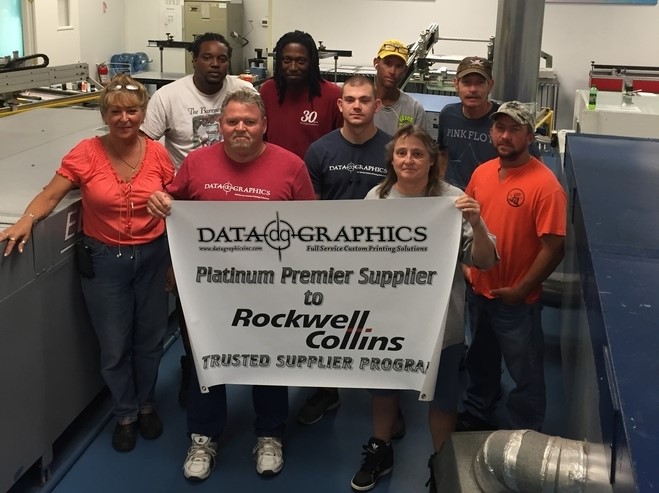
Rockwell Collins Platinum Premier Supplier- (Front L-R) Jamie, Clarence, Josh, Maureen, Lee (Back L-R) Jamar, Antwan, Vern, Tim
6/6/16 – It’s celebration week here on the Data Graphics news page. We are THRILLED with some of the awards we have won in the last several weeks. Here is the screen print team celebrating receiving the Rockwell Collins’ Platinum Supplier Award, the highest level rating they give their suppliers. OK, maybe not everyone here loves to get their pic taken, but we sure love the recognition. Thanks Rockwell Collins, and our awesome screen printing team.
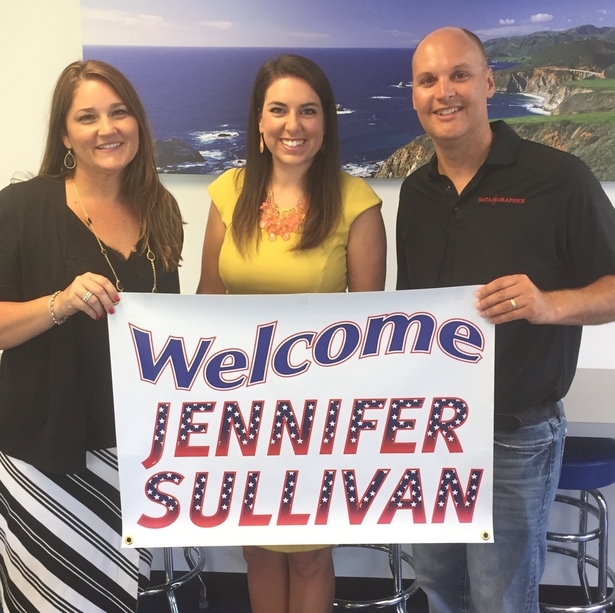
6/3/16 – Yesterday Jennifer Sullivan, member of the Florida State House of Representatives for District 31 visited us. She toured the facility, met with our staff, sat in on a plant meeting, and spoke to us briefly about her goals and eagerness to help small businesses. Her take on Data Graphics? “Thank you for running such a first-class operation. I greatly respect your commitment to excellence and the way in which you genuinely care for your employees and their quality of life …These are the stories I want to be able to share in Tallahassee.” Thanks for the visit, Representative Sullivan. We look forward to working with you in the future.
May 2016 - Boeing Gold Standard
Memorial Day
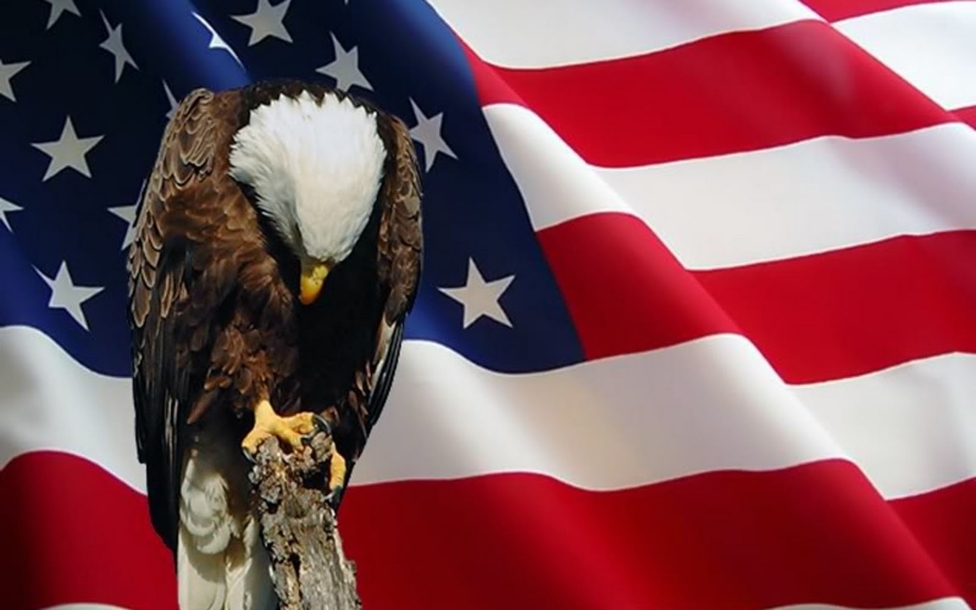
Today especially, we wish to pay tribute to those who gave their lives in the service of their country, and the families that mourn their loss. We don’t have the words ourselves, and instead borrow from that most eloquent of American statesmen. “I feel how weak and fruitless must be any words of mine which should attempt to beguile you from the grief of a loss so overwhelming. But I cannot refrain from tendering to you the consolation that may be found in the thanks of the Republic they died to save. I pray that our Heavenly Father may assuage the anguish of your bereavement, and leave you only the cherished memory of the loved and lost, and the solemn pride that must be yours to have laid so costly a sacrifice upon the altar of freedom.” Abraham Lincoln
Boeing Gold Standard
 We recently learned that last month Data Graphics met the prestigious (and challenging) Gold Standard for Boeing. What exactly does this assessment mean? Not a single one of the nearly 19,000 individual overlays, nameplates and labels that we sent Boeing in the last 12 months was late, or did not meet Boeing’s quality standards. For the last 6 months or more, we also received a rating of 4.8 or higher (out of 5) on the General Performance Assessment Summary. Thanks to everyone on both the Data Graphics team and the Boeing team who helped make this happen. Almost 19,000 parts in a row without a miss…for our next trick, we are going after DiMaggio’s hitting streak.

Welcome Home Josh
Today, in honor of National Military Appreciation Month, we want to pay special tribute to Josh Gee. Josh has been a valued member of the Data Graphics Team for 3 years. He just returned from a 7 month tour of duty with the Air Force National Guard’s 125th fighter wing. Though the operations he participated in are largely classified, he can disclose that he was part of a security forces detail in SW Asia and did see some combat action. During his time there, he finished both his AA degree in criminal justice, and his Airman Leadership School training. With that certification, Josh can become a staff sergeant in the Air Force National Guard once he has met the required time in service. For Josh, the worst part of his tour was having to be away from friends and family for the holidays. He was also no fan of heat and humidity where he was stationed, and said it is even worse than Central Florida. Apparently, it was a cross between a sauna and an oven 24 hours a day, and there were plenty of long, hot days. In fact, one of the things Josh likes most about coming home is being able to work a predictable 8 hour day…in air conditioning.
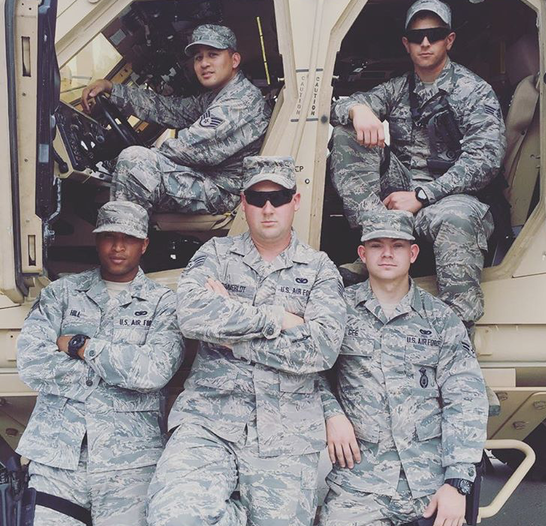
Josh Gee (front right) and members of the Air Force National Guard 125th fighter wing.
Josh comes from a military family, as his grandfather, father, a cousin and uncles, have all served with distinction. In fact, it was his Uncle Vern, a long-time Data Graphics employee, who helped Josh land his job here shortly after he moved to Florida 3 years ago. Josh runs one of the UV presses and is a dedicated employee. We are so happy to have him back. There is a good chance, however, that he will re-enlist for couple years when his initial commitment is up, and have another tour of duty in the future. Josh is 22, so he has several potential years of service left. He is a self-confessed “adrenaline junky” and is seriously considering para-rescue. Apparently, jumping out of planes into combat zones is the only thing that can match the rush of running a screen press. In his spare time he loves to fish, spend time with friends and family, and hunt deer, duck and hog. We are so grateful to have you back with the team, Josh. More importantly, we honor you for your bravery and service. Thanks for all you do, Josh.
Farewell Marilyn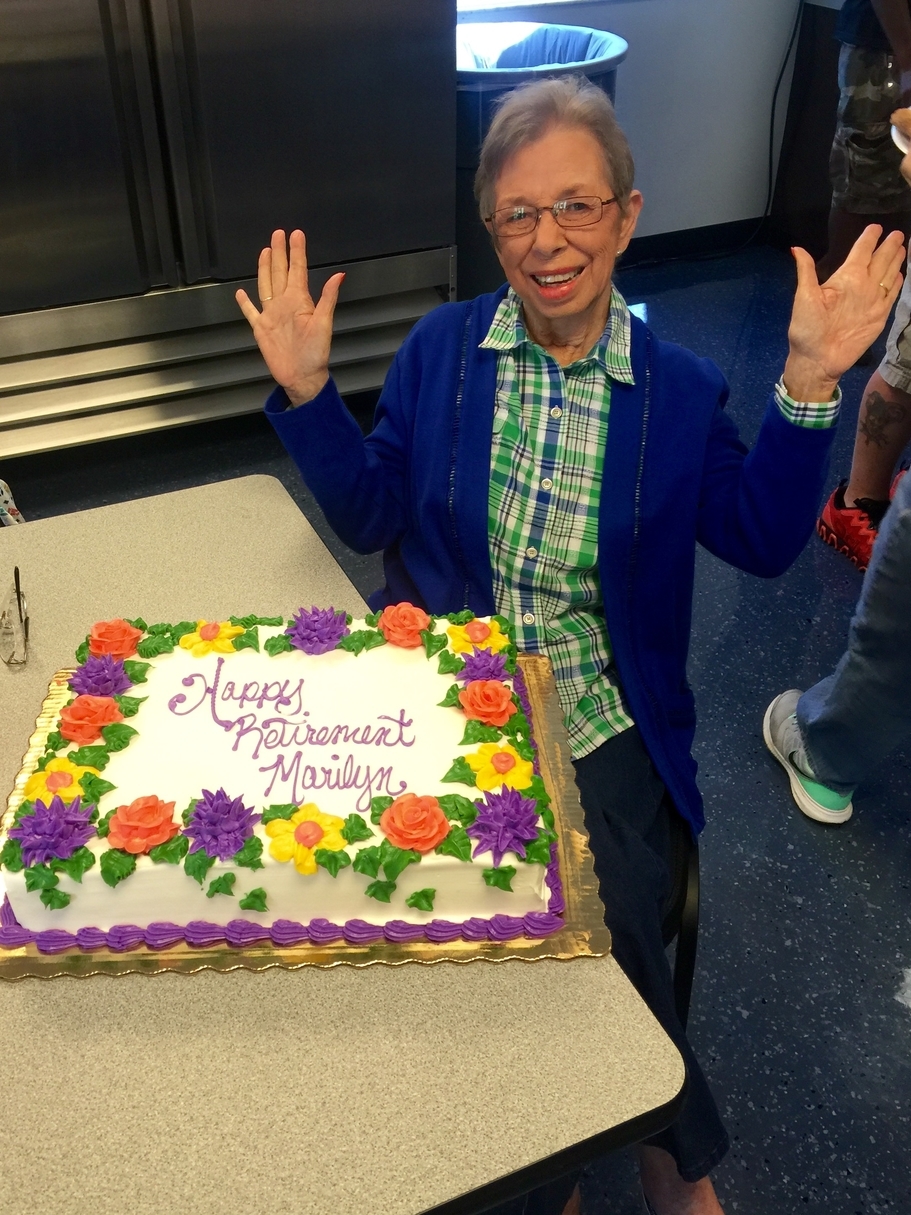 It was a bitter-sweet day at Data Graphics, today. The sweet was not just the cake and the pizza, but the fact that we got to wish Marilyn Garner a happy retirement. Bitter, because after 21 years of service we hate to see her go. She was both an integral part of the accounting department and, universally regarded as a sweetheart. No riding off to the sunset, Marilyn. We expect to see you from time to time. Have a joyous retirement. After 21 years of dedicated service, you deserve it.
May the 4th Be With You
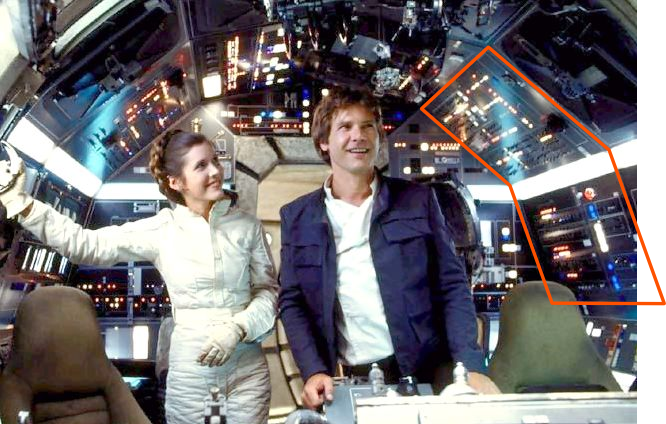
Little Known Fact: All those labels and nameplates on that instrument panel of the Millennium Falcon were manufactured by Data Graphics…a long time ago, in a galaxy far, far away. May the 4th Be With You!
April 2016 - Dave Ramsey Entre-Leadership Conference, Field Trips and Famous Encounters

Congrats to Liz, Mike, Steve, and Earl for having their forklift certification renewed.
Dave Ramsey Entre-Leadership Conference
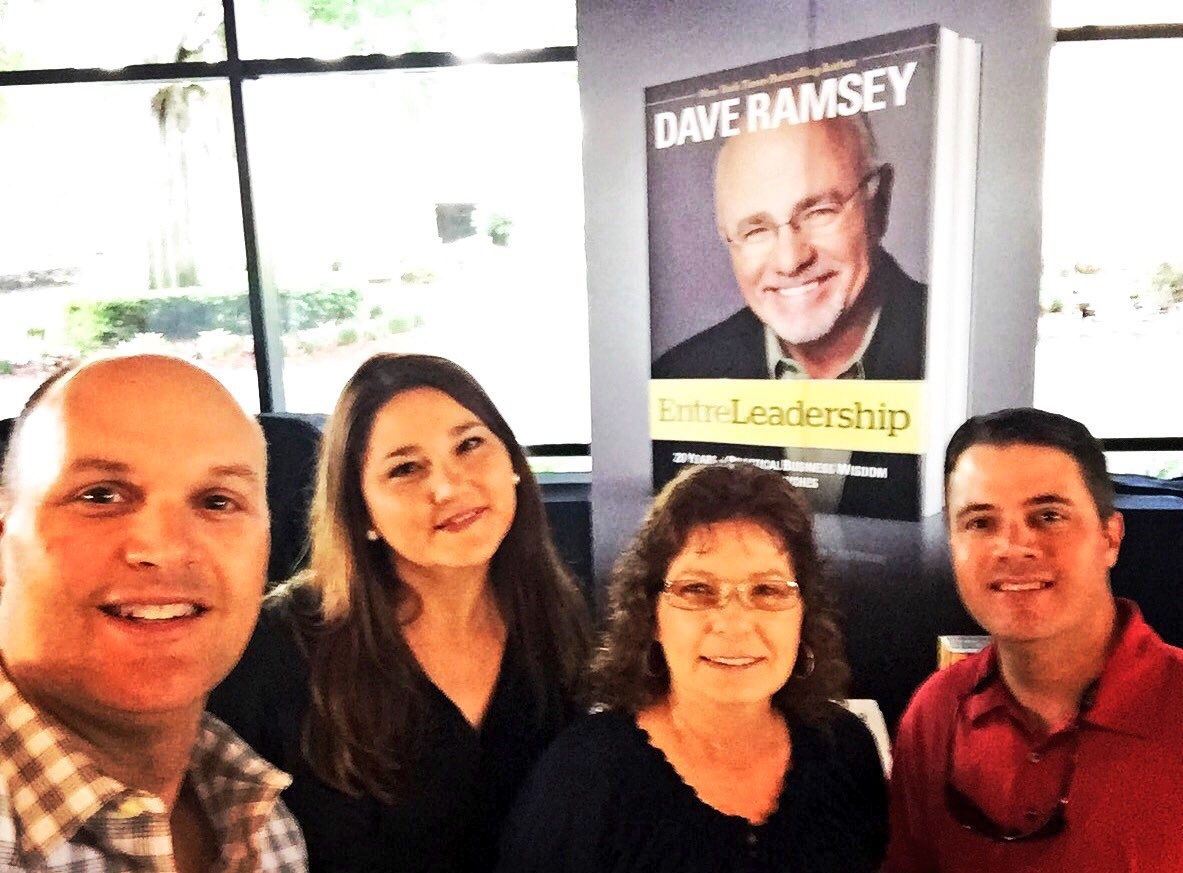
Brad, Buffy, Liz and Mike at the Dave Ramsey Entre-Leadership Conference in Orlando 4/14/16
Faro Field Trip
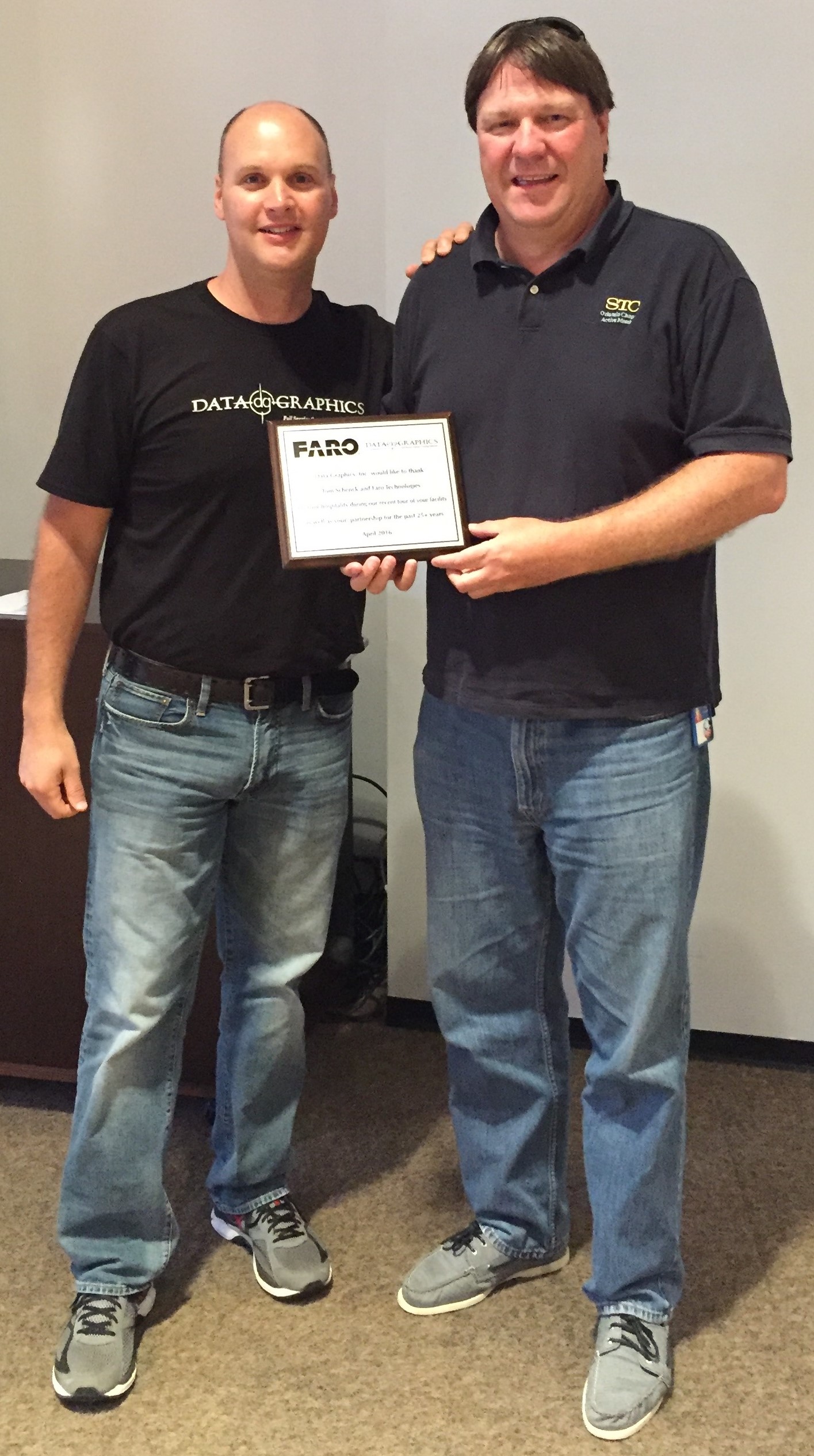
CEO Brad Presenting a plaque honoring our host with the most, Tom. Thanks again.
Special thanks to our good friends at Faro for letting us tour their impressive facility, hear their amazing story, and meet a few members of their team…and and pose next to the Faro bike. Faro, you are awesome!
It’s “Famous Encounters” Time
Our third installment of “famous encounters” hinges around the guys who helped build the Faro Bike you see in the pics above. Yep, that incredible custom motorcycle was built by members of the Orange County Chopper Team.
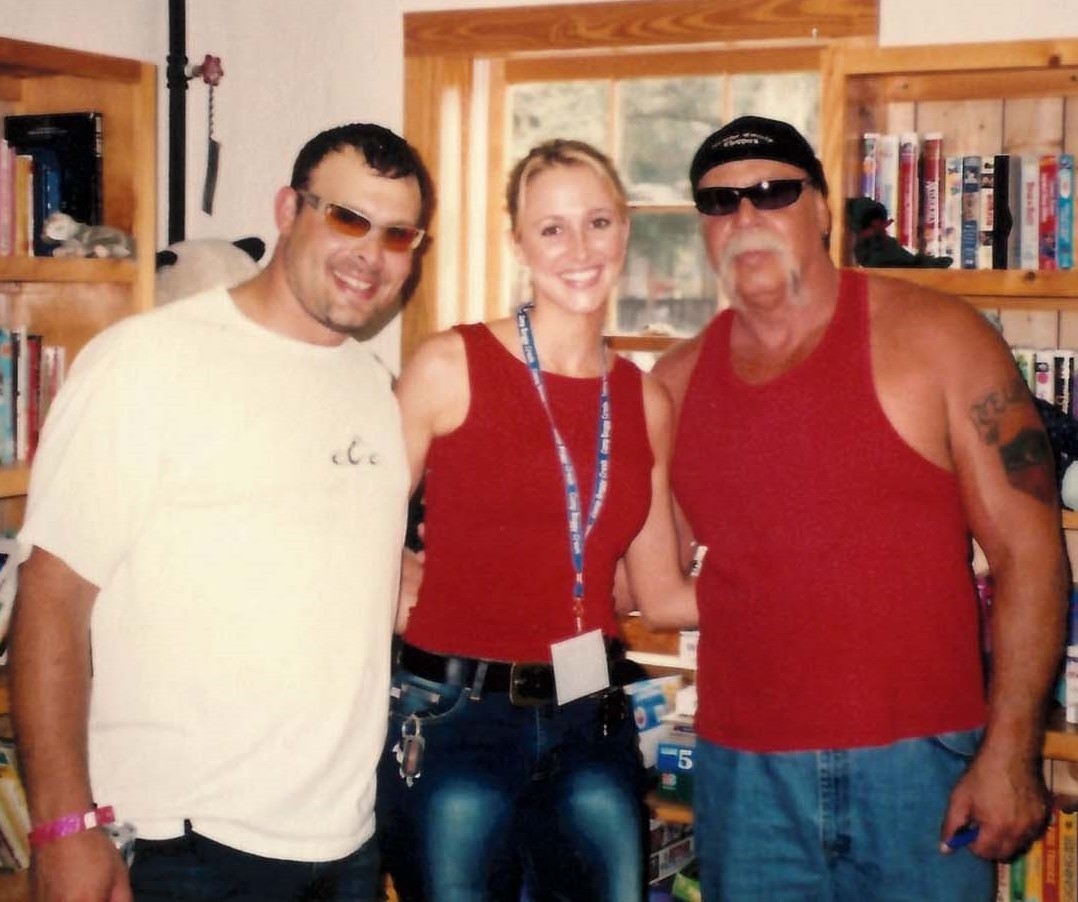
It turns out the Orange County Chopper boys were huge fans of our sales engineer, Shianne, and were eager to get her autograph and pics taken.
Our second in the series of “famous encounters.” Buffy and Jacquelyn bump into Recording Artist “Little John” at the Atlanta airport. Next to our road warriors, his nickname fits pretty well.
Since yesterday was opening day, it seems appropriate that we start with MLB legend Pete Rose. Buffy did have to pay for this autograph, as opposed to the usual random encounters at the airport, but since she was visiting a client in Las Vegas, why not?

March 2016 - Mission Impossible and St. Patrick's Day
3/22- Our thoughts and prayers are with the people of Belgium. Today we are especially thankful for the veterans and families of veterans on our staff and our clients’ staffs. Thank a vet or a first responder for all they do. Where would we be without them?
The ladies went all “Mission Impossible” on us.
https://youtu.be/83V1KpItOmI
3/17- Happy St. Patrick’s Day from Data Graphics, where today all of the labels are green.

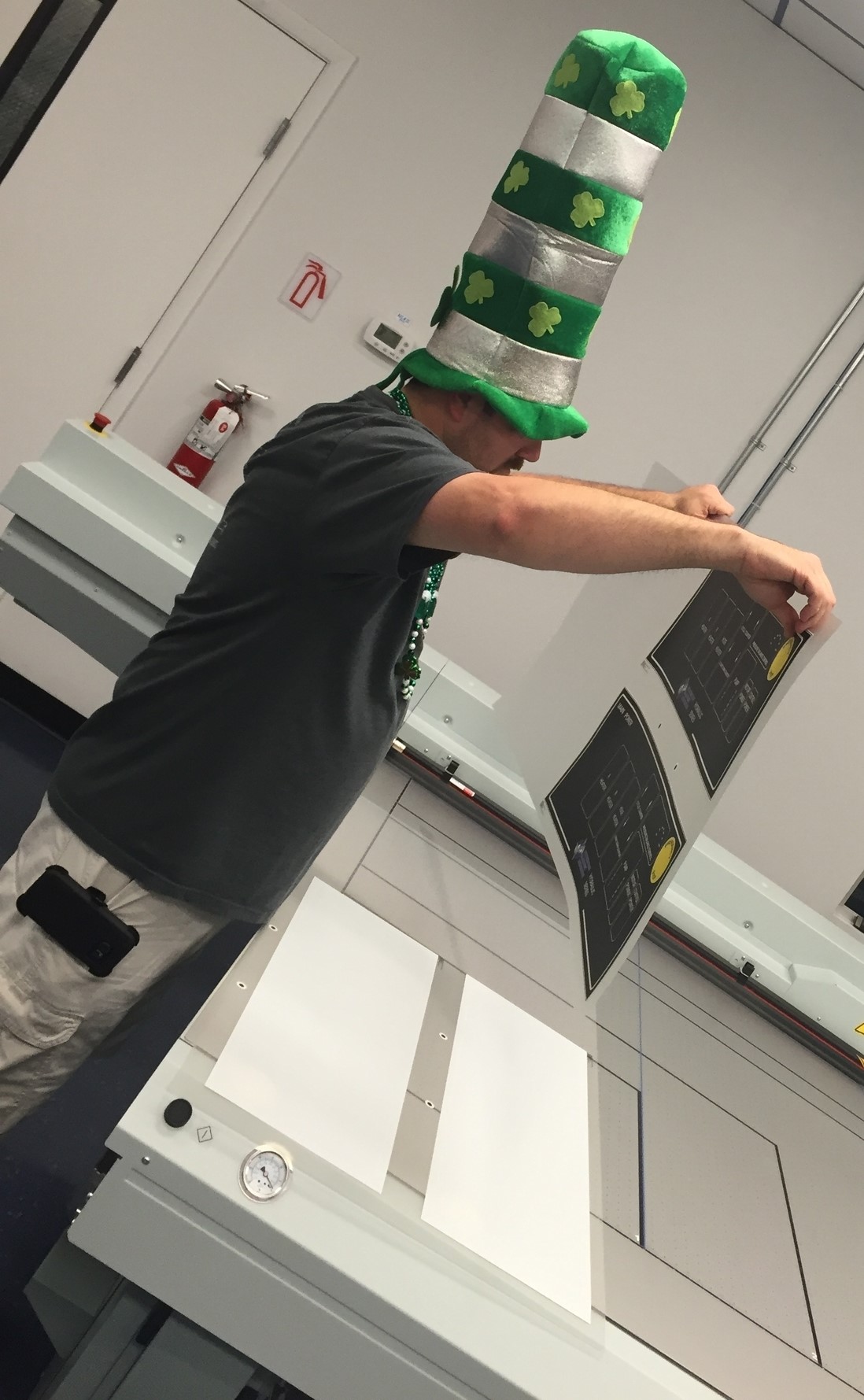
Qualified to Deliver to Your Exact Specifications